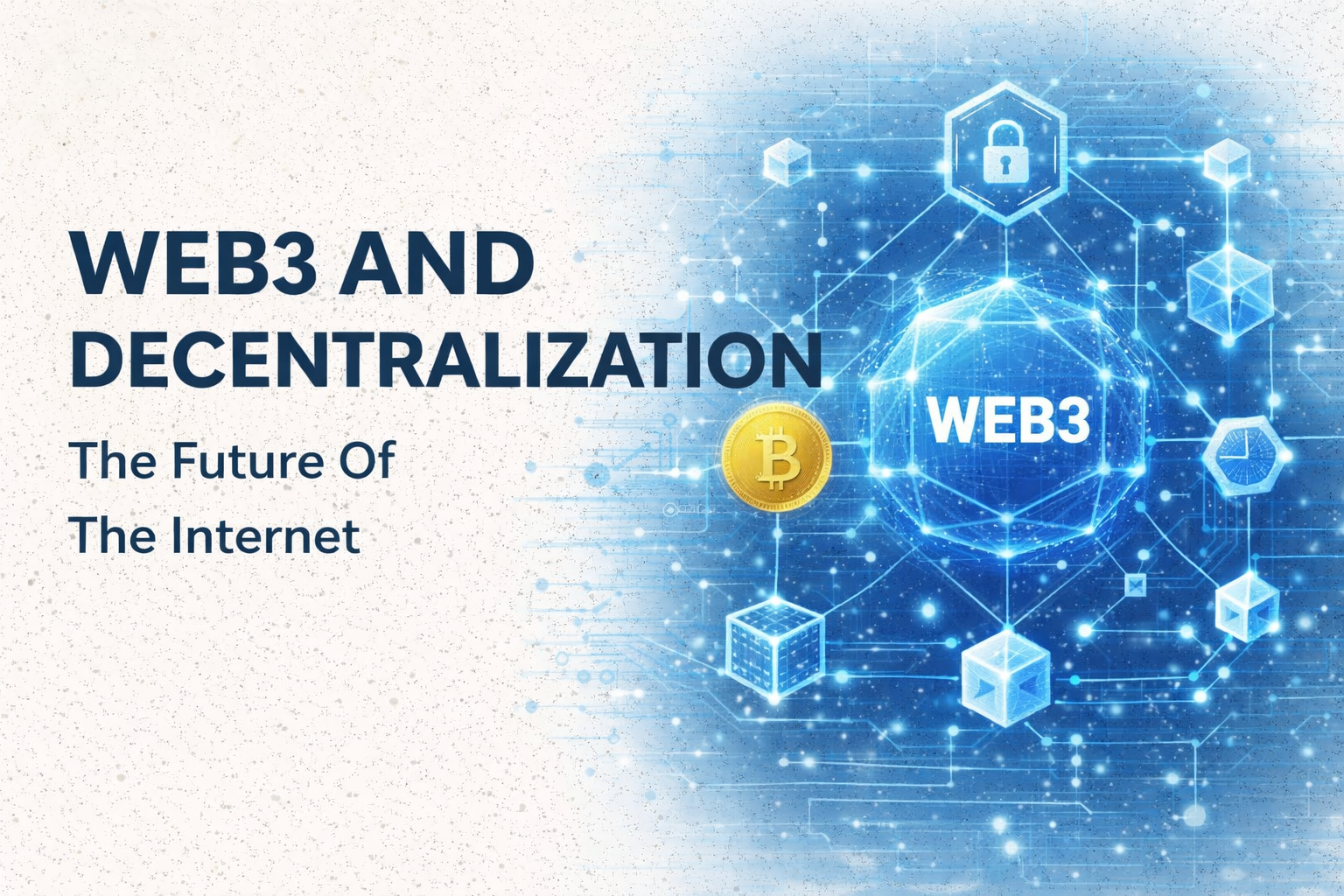
The internet is evolving again. After Web1 (read-only) and Web2 (social & centralized platforms), Web3 represents the next phase — a decentralized, user-owned internet powered by blockchain technology.
In 2026, Web3 is reshaping finance, digital ownership, identity, and online trust.
🌐 What Is Web3?
Web3 is a decentralized version of the internet built on:
- Blockchain technology
- Smart contracts
- Cryptographic security
Instead of companies owning platforms and data, users control their assets, identity, and information.
🔗 Core Technologies Behind Web3
🔹 Blockchain
A distributed ledger that records transactions transparently and securely.
🔹 Smart Contracts
Self-executing code that runs automatically when conditions are met.
🔹 Decentralized Applications (dApps)
Apps that run on blockchain networks instead of centralized servers.
🚀 Why Web3 Is Trending in 2026
🔹 1. Digital Ownership
Users truly own:
- Cryptocurrencies
- NFTs
- Digital identities
🔹 2. Decentralized Finance (DeFi)
Web3 enables lending, trading, and payments without banks.
🔹 3. Trustless Systems
Transactions happen without intermediaries, reducing fraud.
🌍 Real-World Use Cases of Web3
| Area | Web3 Application |
|---|---|
| Finance | DeFi platforms |
| Gaming | Play-to-earn games |
| Identity | Decentralized IDs |
| Content | Creator-owned platforms |
⚠️ Challenges of Web3
- Scalability issues
- Regulatory uncertainty
- User experience complexity
- Security vulnerabilities
Despite challenges, innovation continues rapidly.
🔮 Future of Web3
In the coming years, Web3 will:
- Integrate with AI and IoT
- Power digital nations & DAOs
- Redefine online privacy
✨ Final Thoughts
Web3 and decentralization aim to return control of the internet to users. While still evolving, it represents a bold vision for a more open, transparent, and fair digital future.

3 thoughts on “Web3 and Decentralization: The Future of the Internet”