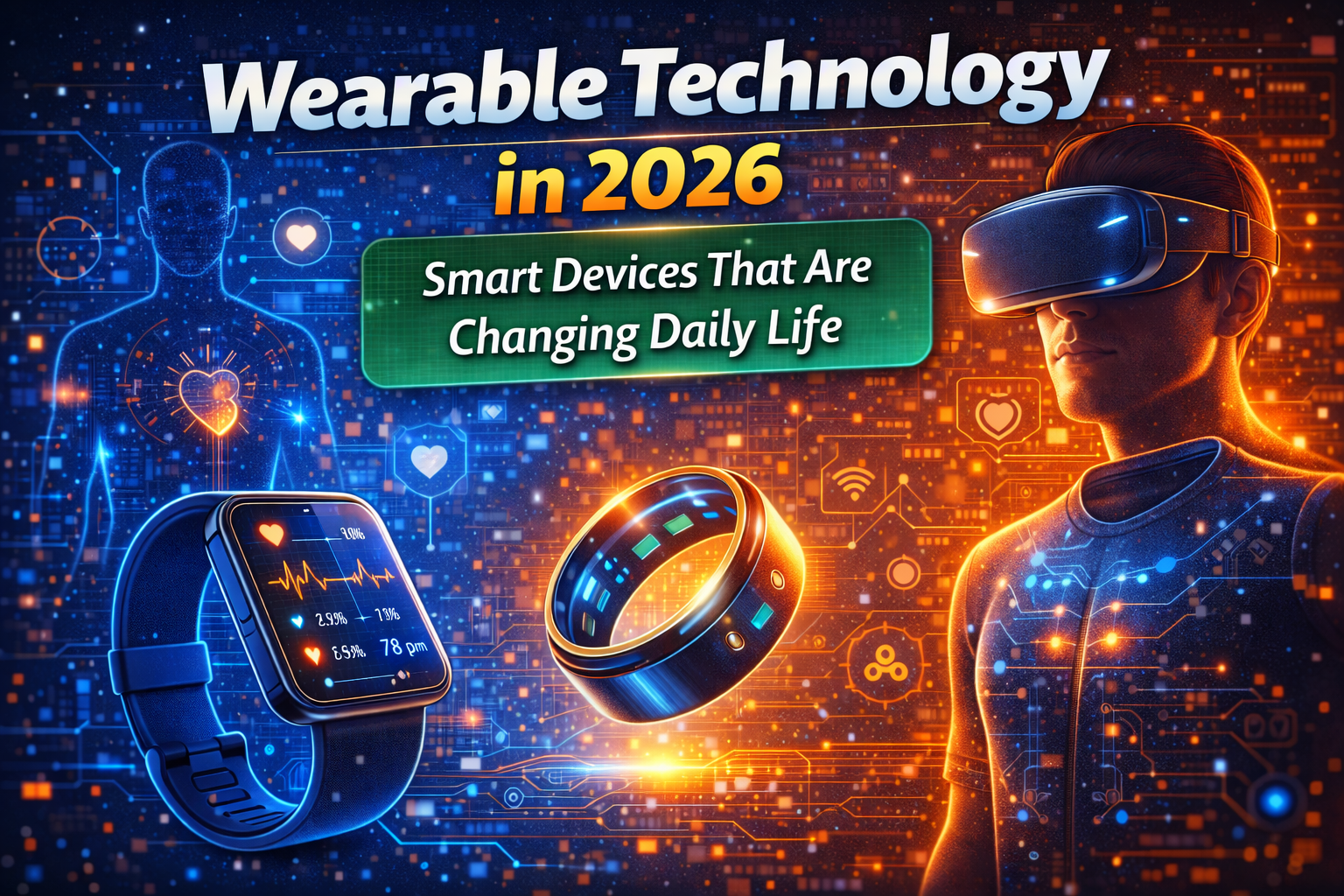
Wearable technology has evolved far beyond fitness bands and smartwatches. In 2026, wearables are becoming intelligent personal assistants, monitoring health, improving productivity, and enhancing daily life in powerful ways.
This article explains what wearable technology is, how it works, key devices, benefits, challenges, and what the future holds.
What Is Wearable Technology?
Wearable technology refers to smart electronic devices worn on the body that collect data and provide real-time insights.
Common wearable devices include:
- Smartwatches
- Fitness trackers
- Smart rings
- AR/VR headsets
- Smart clothing
These devices use sensors, AI, and connectivity to deliver personalized experiences.
Why Wearable Technology Is Growing Rapidly
Wearables are booming in 2026 because they:
- Track health continuously
- Integrate with smartphones and AI
- Provide real-time alerts
- Support remote healthcare
- Improve productivity
People want data-driven insights about their bodies and habits.
Popular Wearable Devices in 2026
⌚ Smartwatches
Track heart rate, sleep, stress, ECG, and notifications.
💍 Smart Rings
Monitor sleep quality, oxygen levels, and recovery without bulky devices.
🥽 AR/VR Headsets
Used for gaming, education, training, and virtual collaboration.
👕 Smart Clothing
Clothing embedded with sensors to track posture, movement, and body temperature.
Role of AI in Wearable Technology
AI powers wearables by:
- Analyzing health patterns
- Predicting potential issues
- Offering personalized recommendations
- Detecting anomalies early
This turns raw data into actionable insights.
Wearables in Healthcare
Wearable technology is revolutionizing healthcare:
- Early disease detection
- Remote patient monitoring
- Chronic condition management
- Mental health tracking
Doctors can monitor patients without constant hospital visits.
Benefits of Wearable Technology
Key advantages include:
- Continuous health monitoring
- Personalized fitness guidance
- Improved safety and alerts
- Better lifestyle awareness
- Increased productivity
Wearables help users make smarter daily decisions.
Challenges and Concerns
Despite benefits, wearables face challenges:
⚠️ Data Privacy
Health data must be securely stored and protected.
⚠️ Battery Life
Advanced features drain power quickly.
⚠️ Accuracy Issues
Sensor data may vary across devices.
Future of Wearable Technology
By 2030, wearables will:
- Become smaller and more powerful
- Integrate directly with medical systems
- Offer real-time disease prevention
- Act as AI-powered life assistants
Wearables will move from optional gadgets to essential tools.
Final Thoughts
Wearable technology in 2026 is changing how we understand our bodies, health, and productivity. With AI-driven insights and constant connectivity, wearables are shaping a smarter, healthier future.
Best AI Tools for Students in 2026 (Free & Paid) click here..
AI vs Human Intelligence: What’s theReal Difference in 2026? click here…
AI Scams in 2026: How to Stay Safe from AI-Powered Fraud click here..


One thought on “Wearable Technology in 2026: Smart Devices Shaping the Future”