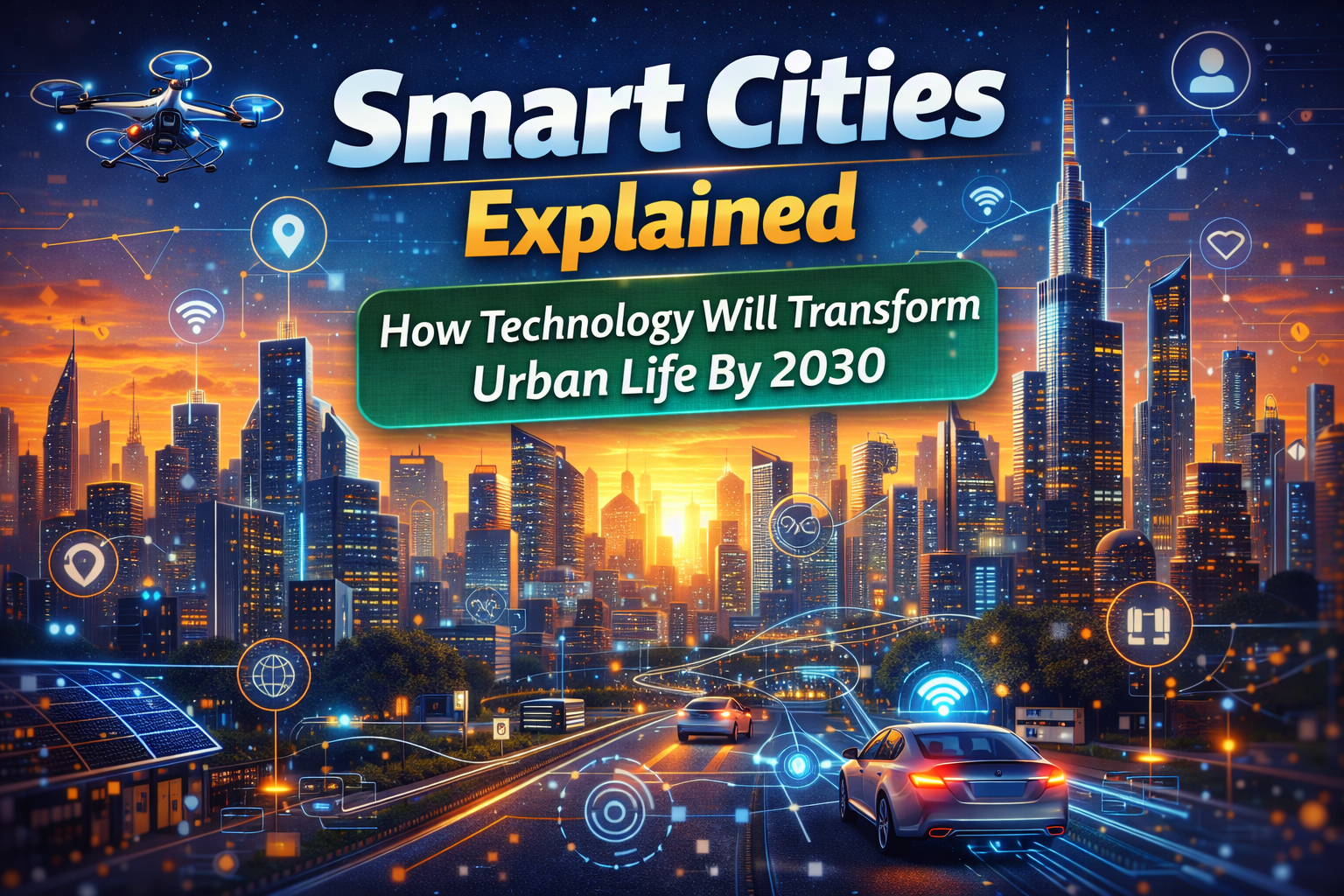
Cities around the world are growing rapidly, and traditional infrastructure is struggling to keep up. To solve problems like traffic, pollution, energy waste, and public safety, governments are turning to Smart City technology.
In this article, you’ll learn what smart cities are, how they work, key technologies involved, real-world examples, benefits, challenges, and the future of urban living.
What Is a Smart City?
A smart city uses digital technology, data, and artificial intelligence to improve the quality of life for citizens and make city operations more efficient.
Smart cities rely on:
- Internet of Things (IoT)
- Artificial Intelligence (AI)
- Big Data
- Cloud computing
- Sensors and automation
The goal is to create cities that are safer, cleaner, faster, and more sustainable.
How Smart Cities Work
Smart cities collect real-time data from various sources and use it to make better decisions.
Key data sources include:
- Traffic cameras and sensors
- Smart electricity and water meters
- Public transport systems
- Weather and pollution sensors
- Citizen mobile apps
AI systems analyze this data and automate responses, such as adjusting traffic signals or managing energy usage.
Core Technologies Behind Smart Cities
1. Internet of Things (IoT)
IoT devices connect physical infrastructure to the digital world, enabling real-time monitoring.
2. Artificial Intelligence
AI analyzes city data to predict problems and optimize services.
3. Big Data Analytics
Large datasets help cities understand patterns and improve planning.
4. Cloud Computing
Cloud platforms store and process massive amounts of city data.
5. 5G Connectivity
High-speed networks enable instant communication between devices.
Real-World Examples of Smart Cities
🌍 Singapore
- Smart traffic management
- AI-based public services
- Digital citizen platforms
🇪🇸 Barcelona
- Smart street lighting
- Water management systems
- IoT-enabled public services
🇦🇪 Dubai
- AI-driven government services
- Smart policing
- Autonomous transport testing
Benefits of Smart Cities
Smart city initiatives provide many advantages:
- Reduced traffic congestion
- Lower energy consumption
- Faster emergency response
- Improved public safety
- Better waste and water management
- Enhanced citizen engagement
Overall, smart cities make urban life more efficient and sustainable.
Challenges and Risks of Smart Cities
Despite the benefits, smart cities also face challenges:
⚠️ Data Privacy
Large-scale data collection raises concerns about surveillance.
⚠️ Cybersecurity
Connected infrastructure is vulnerable to cyberattacks.
⚠️ High Costs
Building smart infrastructure requires major investment.
⚠️ Digital Divide
Not all citizens have equal access to technology.
Role of AI Agents in Smart Cities
AI agents play a critical role by:
- Managing traffic flow autonomously
- Monitoring public safety systems
- Optimizing energy grids
- Supporting disaster response
These AI agents can operate continuously and respond faster than humans.
Future of Smart Cities by 2030
By 2030, smart cities will likely feature:
- Autonomous public transport
- AI-managed energy systems
- Smart healthcare services
- Predictive maintenance of infrastructure
- Greater citizen participation through digital platforms
Cities will become more human-centric, not just technology-driven.
Are Smart Cities the Future of Urban Living?
Yes—but only if implemented responsibly.
Smart cities must balance:
- Innovation and privacy
- Efficiency and inclusivity
- Technology and human values
When done right, smart cities can dramatically improve quality of life.
Final Thoughts
Smart cities represent the future of urban living. By combining AI, IoT, and data-driven decision-making, cities can solve complex problems and create a better environment for citizens.
The success of smart cities depends not just on technology, but on ethical use, strong security, and citizen trust.
Smart Cities Explained: How AI and IoT Are Shaping Urban Life click here..
How AI Is Replacing Repetitive Jobs (And Creating New Ones) click here..
Enterprise AI: How Businesses Are Using AI at Scale click here..


One thought on “Smart Cities Explained: How Technology Will Transform Urban Life”