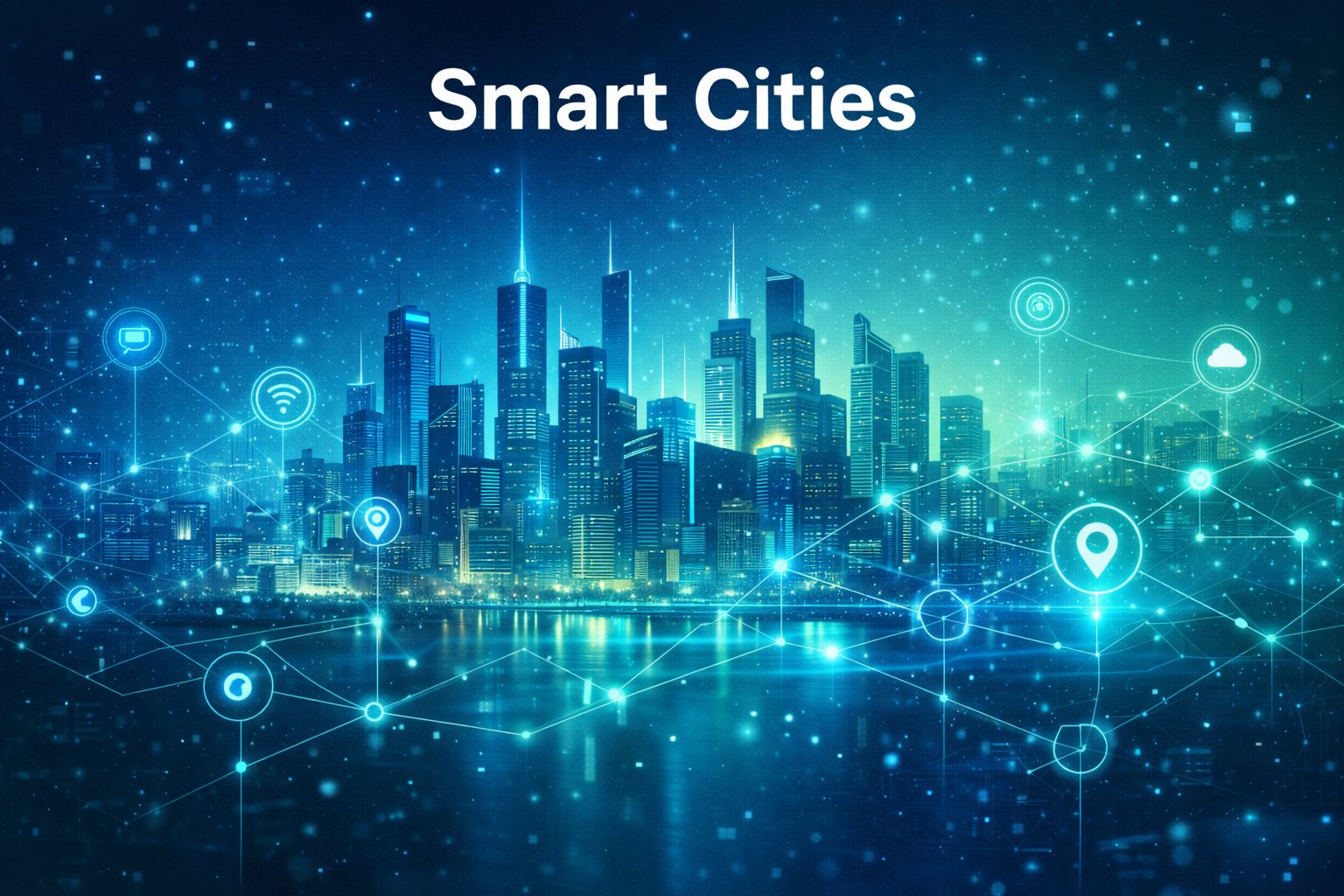
Cities around the world are becoming smarter. In 2026, Smart Cities use Artificial Intelligence (AI) and the Internet of Things (IoT) to improve transportation, energy use, safety, and quality of life.
This article explains what smart cities are, how AI and IoT work together, and why this transformation matters for the future of urban living.
🌆 What Is a Smart City?
A smart city uses connected technologies to:
- Collect real-time data
- Analyze city operations
- Optimize services automatically
The goal is to create cities that are efficient, sustainable, and citizen-friendly.
🤖 Role of AI in Smart Cities
AI acts as the brain of a smart city. It analyzes data and makes intelligent decisions.
Key AI functions:
- Traffic prediction and control
- Crime pattern analysis
- Energy demand forecasting
- Public service optimization
AI turns raw data into actionable insights.
📡 Role of IoT in Smart Cities
IoT devices act as the senses of a smart city.
Examples of IoT devices:
- Smart traffic lights
- Air quality sensors
- Smart water meters
- Connected street lights
These devices continuously send data to AI systems.
🔁 How AI and IoT Work Together
| Component | Function |
|---|---|
| IoT Sensors | Collect real-time data |
| Networks | Transmit data |
| AI Systems | Analyze & predict |
| Automation | Take actions |
Together, they create a responsive urban ecosystem.
🚦 Smart City Use Cases in 2026
🔹 1. Smart Traffic Management
AI adjusts traffic signals based on real-time congestion, reducing travel time and pollution.
🔹 2. Smart Energy & Utilities
Cities use AI to:
- Reduce energy waste
- Balance power demand
- Detect water leaks early
🔹 3. Public Safety & Surveillance
AI-powered cameras:
- Detect unusual activity
- Improve emergency response times
Privacy-focused regulations are becoming essential.
🔹 4. Waste Management
Smart bins alert authorities when full, improving efficiency and cleanliness.
🌱 Benefits of Smart Cities
- Reduced traffic congestion
- Lower carbon emissions
- Improved public safety
- Better quality of life
- Cost savings for governments
Smart cities are also more resilient to climate challenges.
⚠️ Challenges of Smart City Development
- High implementation costs
- Data privacy concerns
- Cybersecurity risks
- Digital divide
Careful planning and regulation are crucial.
🔮 Future of Smart Cities
By 2030:
- AI-driven urban planning will be common
- Autonomous public transport will expand
- Citizen-focused digital services will grow
Smart cities will evolve into human-centered intelligent ecosystems.
✨ Final Thoughts
Smart cities are no longer science fiction. With AI and IoT working together, urban life in 2026 is becoming safer, greener, and more efficient.
Cities that invest in smart technologies today will define the future of living.
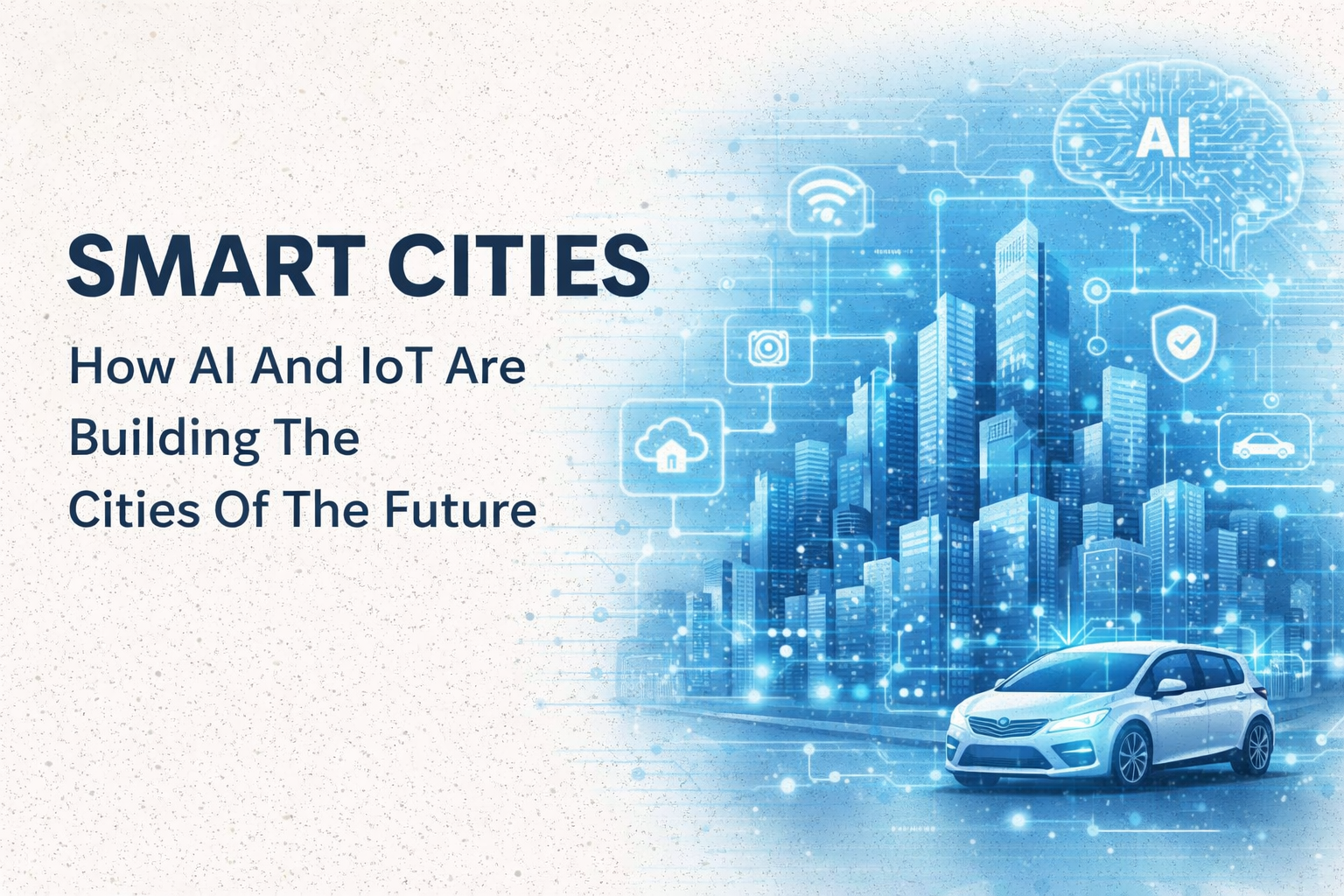
Smart Cities: How AI and IoT Are Building the Cities of the Future click here…
Enterprise AI: How Businesses Are Using AI at Scale click here…

One thought on “Smart Cities Explained: How AI and IoT Are Shaping Urban Life”