Quantum computing is no longer a futuristic concept limited to science fiction. Tech giants and research labs are actively developing quantum computers that could solve problems impossible for today’s machines. But what exactly is quantum computing, and why is it considered revolutionary?
This article explains quantum computing in simple terms, its real-world uses, benefits, challenges, and what the future holds.
What Is Quantum Computing?
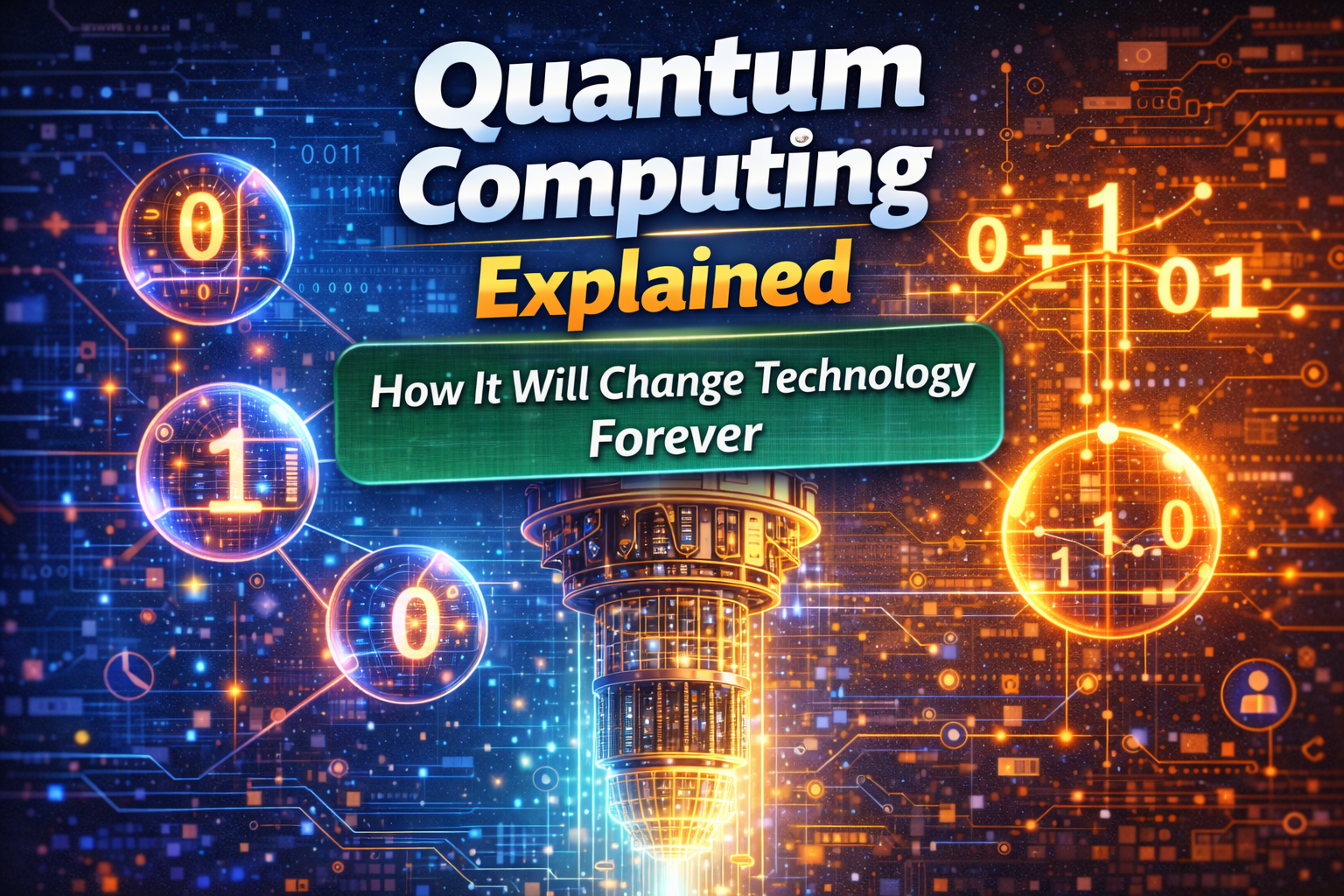
Quantum computing is a new type of computing that uses quantum mechanics instead of traditional binary logic.
Traditional Computers:
- Use bits
- Bits are either 0 or 1
Quantum Computers:
- Use qubits
- Qubits can be 0, 1, or both at the same time
This ability allows quantum computers to process massive amounts of data simultaneously.
Key Concepts Behind Quantum Computing
1. Qubits
Qubits are the building blocks of quantum computers. Unlike classical bits, qubits can exist in multiple states at once.
2. Superposition
Superposition allows qubits to perform many calculations simultaneously, dramatically increasing processing power.
3. Entanglement
Entangled qubits are linked together, meaning changes in one qubit instantly affect another—even over long distances.
4. Quantum Interference
Quantum systems amplify correct solutions while canceling out incorrect ones, improving accuracy.
Why Quantum Computing Is So Powerful
Quantum computers can:
- Solve complex calculations in seconds
- Analyze massive datasets efficiently
- Optimize problems that would take classical computers thousands of years
This makes them ideal for tasks like cryptography, drug discovery, and AI optimization.
Real-World Applications of Quantum Computing
🔐 Cybersecurity & Cryptography
Quantum computers could break traditional encryption, leading to the creation of quantum-safe security systems.
💊 Healthcare & Drug Discovery
Quantum simulations can model molecules accurately, speeding up drug development and medical research.
🤖 Artificial Intelligence
Quantum computing can train AI models faster and improve pattern recognition.
🌦 Climate & Weather Forecasting
More accurate climate modeling and disaster prediction using complex simulations.
🚀 Space & Scientific Research
Solving physics problems that are too complex for classical computers.
Challenges of Quantum Computing
Despite its promise, quantum computing faces major challenges:
- Extremely expensive hardware
- Requires near-absolute-zero temperatures
- Qubits are unstable and error-prone
- Limited real-world availability
Researchers are actively working on error correction and scalable quantum systems.
Who Is Leading Quantum Computing?
Major players include:
- IBM
- Microsoft
- Intel
- Amazon Web Services (AWS)
Many governments are also investing heavily in quantum research.
When Will Quantum Computing Go Mainstream?
Experts believe:
- Early practical use: 2026–2030
- Commercial adoption: 2030+
- Full mainstream impact: Next 10–20 years
Until then, quantum computing will work alongside classical computers.
Quantum Computing vs Classical Computing
| Feature | Classical Computing | Quantum Computing |
|---|---|---|
| Data Unit | Bit (0 or 1) | Qubit (0, 1, both) |
| Speed | Limited | Exponentially faster |
| Power Consumption | Moderate | Very High |
| Use Cases | Daily computing | Advanced research |
Is Quantum Computing a Threat?
Quantum computing is not dangerous by itself, but it requires new security systems. This has led to the rise of post-quantum cryptography to protect future data.
Final Thoughts
Quantum computing has the potential to reshape technology, medicine, AI, and cybersecurity. While still in development, its impact will be transformational once mature.
The next decade will define how quantum technology integrates into everyday life—and those who understand it early will be ahead of the curve.
https://techbuddy24.com/quantum-computing-the-next-big-technology-revolution click here..
Smart Cities Explained: How AI and IoT Are Shaping Urban Life click here..
Quantum Computing for Beginners: Why It Matters More Than You Think click here..