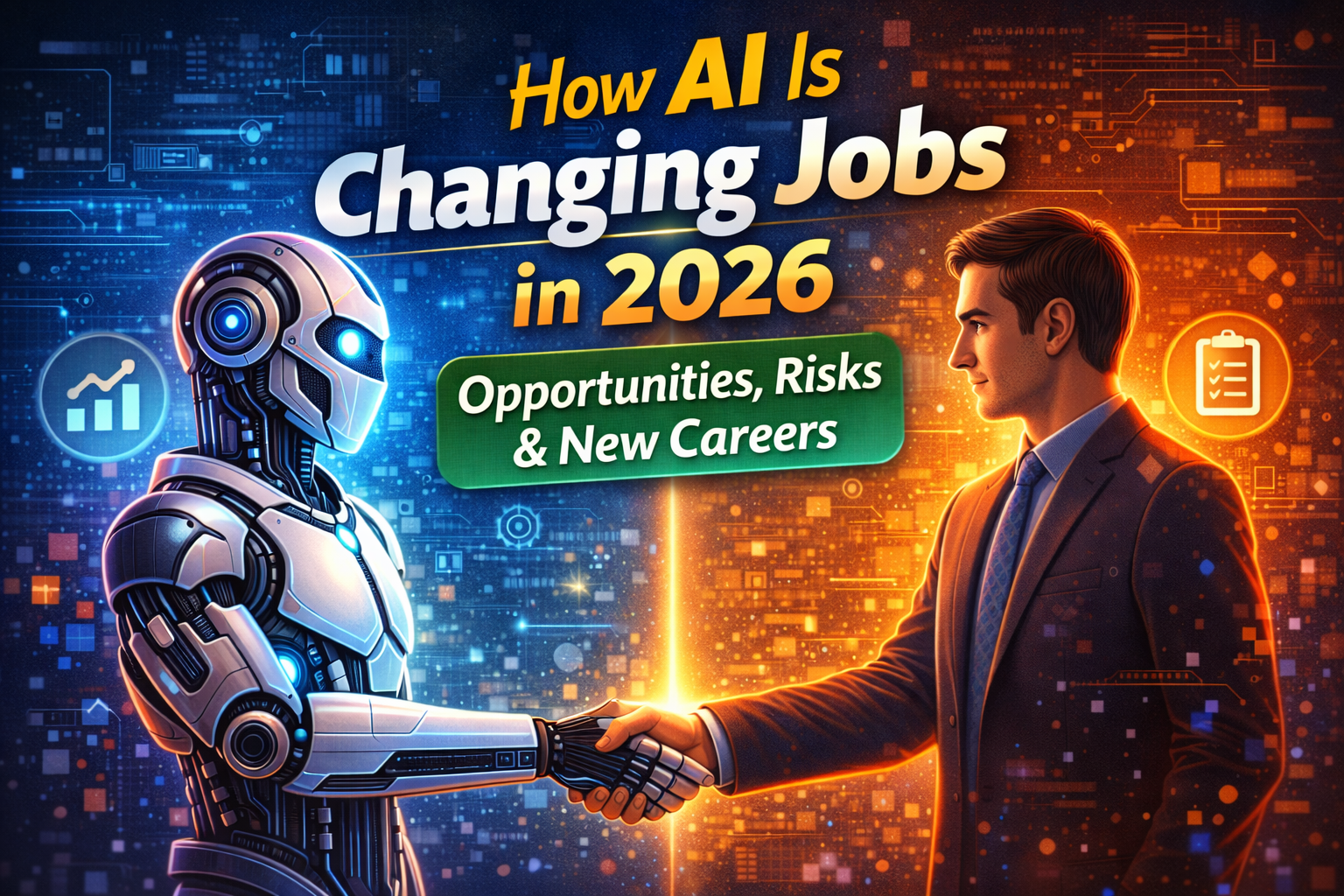
Artificial Intelligence is no longer a future concept—it is actively reshaping the global job market. From automation and AI agents to smart analytics, AI is transforming how we work, what jobs exist, and which skills matter most.
In this article, we’ll explore how AI is changing jobs in 2026, the opportunities it creates, the risks involved, and how you can stay relevant in an AI-driven world.
What Does AI Mean for Jobs?
AI refers to machines and software that can perform tasks that typically require human intelligence, such as:
- Data analysis
- Language translation
- Decision-making
- Automation of repetitive tasks
As AI adoption increases, job roles are evolving rather than disappearing completely.
Jobs Most Affected by AI in 2026
Some jobs are more vulnerable to automation than others.
High-Risk Job Categories:
- Data entry operators
- Basic customer support roles
- Manual reporting and accounting tasks
- Simple content moderation
AI can perform these tasks faster, cheaper, and with fewer errors.
Jobs That Are Growing Because of AI
While some jobs decline, many new opportunities are emerging.
Fast-Growing AI-Related Jobs:
- AI & Machine Learning Engineer
- Data Analyst / Data Scientist
- Prompt Engineer
- AI Ethics Specialist
- Cybersecurity Expert
- Automation Consultant
AI is creating more high-skill, high-paying roles than it replaces.
How AI Is Transforming Existing Jobs
AI is not replacing professionals—it is augmenting them.
Examples:
- Doctors use AI for faster and more accurate diagnosis
- Marketers use AI for content ideas and analytics
- Developers use AI coding assistants
- Teachers use AI for personalized learning
In most industries, AI acts as a productivity booster, not a replacement.
Benefits of AI in the Workplace
AI brings several advantages to modern jobs:
- Increased productivity
- Faster decision-making
- Reduced human errors
- Better data-driven insights
- Ability to focus on creative and strategic work
Employees who use AI tools effectively gain a strong competitive edge.
Risks and Challenges of AI in Jobs
Despite its benefits, AI also introduces challenges.
Key Concerns:
- Job displacement in low-skill roles
- Skill gaps and reskilling pressure
- Data privacy issues
- Bias in AI decision systems
Governments and companies must focus on ethical AI and workforce reskilling.
Skills You Need to Survive the AI Era
To stay relevant in 2026 and beyond, focus on future-proof skills.
Most Important Skills:
- Digital literacy
- Critical thinking
- Creativity
- Problem-solving
- AI tool usage
- Emotional intelligence
Learning how to work with AI is more important than competing against it.
Will AI Replace Humans Completely?
No. AI lacks:
- Emotional intelligence
- Moral judgment
- Creativity beyond patterns
- Human values and empathy
The future belongs to human + AI collaboration, not replacement.
The Future of Jobs in an AI World
In the coming years:
- Routine jobs will decline
- Tech-driven roles will grow
- Lifelong learning will become essential
- AI-human collaboration will dominate workplaces
Those who adapt early will benefit the most.
Final Thoughts
AI is changing jobs—but it’s not the end of work. It’s the beginning of a new way of working.
Instead of fearing AI, focus on learning, adapting, and using it as a powerful tool to enhance your career.
How AI Is Replacing Repetitive Jobs (And Creating New Ones) click here…
Best AI Tools for Students in 2026 (Free & Paid) click here..
How AI Agents Work: A Step-by-Step Beginner Guide click here..

3 thoughts on “How AI Is Changing Jobs in 2026: Opportunities & Risks”