Introduction
As data generation grows rapidly through smartphones, IoT devices, and smart systems, traditional cloud computing is facing performance and latency challenges. This is where Edge Computing comes in.
Edge computing processes data closer to the source, reducing delays and improving real-time performance. It is becoming a key technology behind smart cities, autonomous vehicles, and IoT networks.
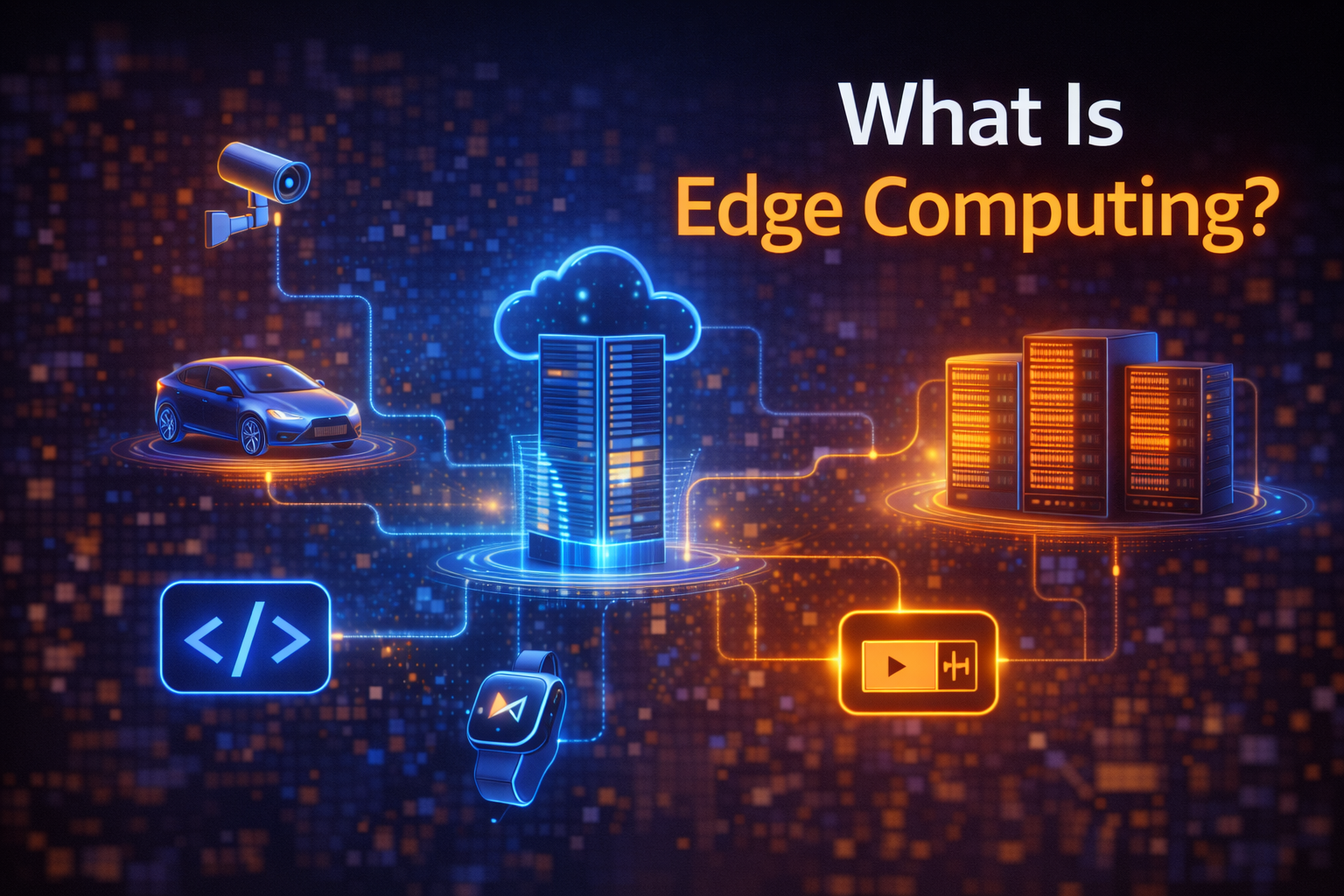
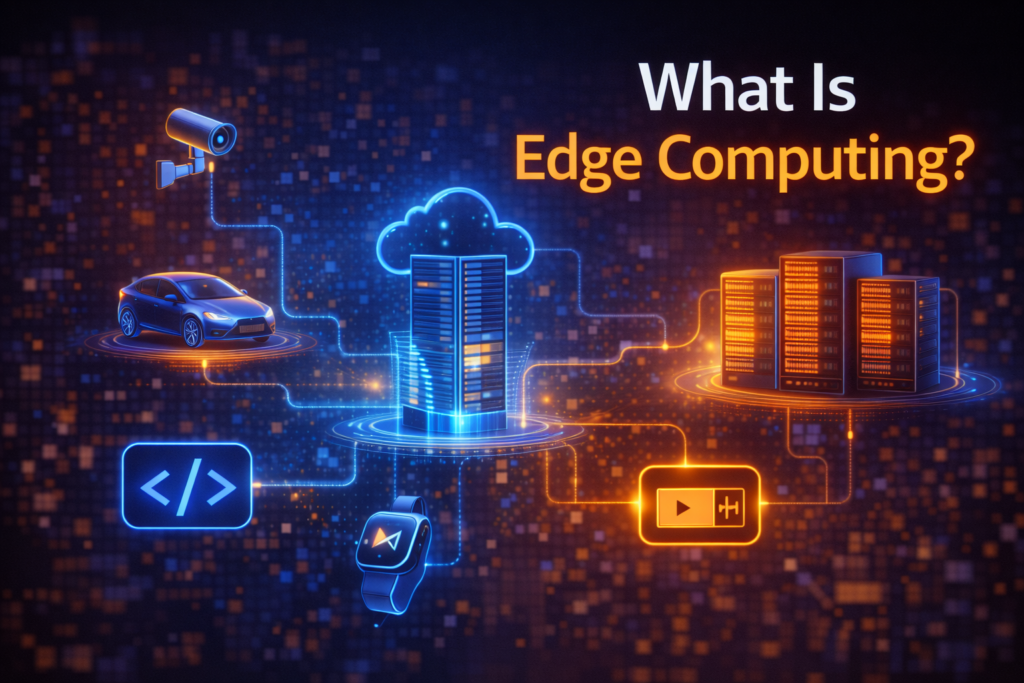
What Is Edge Computing?
Edge computing is a computing model where data is processed near the device or data source, instead of sending it to a centralized cloud server.
Simple definition:
➡️ Edge computing brings computation closer to where data is created.
Why Edge Computing Is Important
Traditional cloud computing sends data to distant servers, which can cause:
- Latency delays
- Network congestion
- Security risks
Edge computing solves these problems by handling data locally.
How Edge Computing Works
- Data is generated by a device (sensor, camera, smartphone)
- Processing happens at the “edge” (local server or device)
- Only important data is sent to the cloud
This reduces bandwidth use and improves response time.
Edge Computing vs Cloud Computing
| Feature | Edge Computing | Cloud Computing |
|---|---|---|
| Data processing | Local | Centralized |
| Latency | Very low | Higher |
| Internet dependency | Low | High |
| Security | Higher | Moderate |
Both models work together rather than replacing each other.
Real-World Examples of Edge Computing
🚗 Autonomous Vehicles
Cars process sensor data instantly for safe driving.
🏙 Smart Cities
Traffic systems and surveillance cameras work in real time.
🏥 Healthcare
Wearables monitor patients and respond instantly.
🏭 Manufacturing
Machines detect faults immediately to prevent downtime.
Benefits of Edge Computing
✔ Faster response time
✔ Reduced latency
✔ Lower bandwidth usage
✔ Improved security
✔ Better reliability
Challenges of Edge Computing
❌ Higher hardware costs
❌ Complex management
❌ Limited storage at edge devices
Despite challenges, adoption is growing fast.
Edge Computing and IoT
Edge computing is essential for IoT because:
- IoT devices generate massive data
- Real-time decisions are critical
- Cloud-only systems are too slow
Edge + IoT = smarter, faster systems.
Future of Edge Computing
In the coming years, edge computing will:
- Work closely with AI
- Support 5G and 6G networks
- Enable real-time AI decisions
- Power next-generation smart devices
Conclusion
Edge computing is transforming how data is processed by reducing delays and improving efficiency. As connected devices increase, edge computing will become a foundation of modern digital infrastructure.
It’s not replacing the cloud—it’s making computing smarter and faster.
What Is Generative AI? Meaning, Examples, and Real-World click here….
Will AI Replace Jobs? Truth About Automation and Future Careers click here…
Quantum Computing Explained: How It Will Transform Technology in the Future click here…