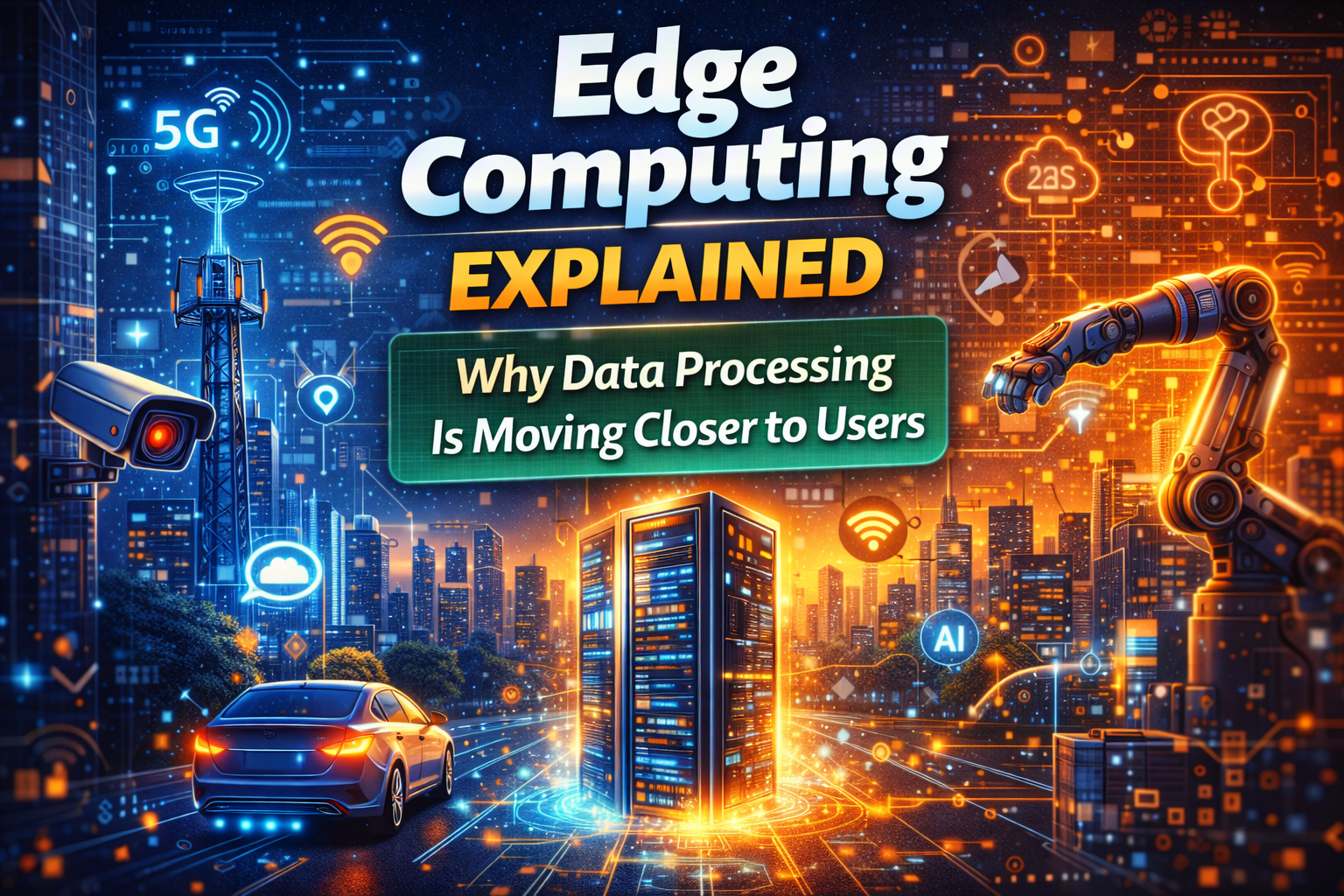
As the world becomes more connected, the demand for faster data processing is growing rapidly. Traditional cloud computing alone is no longer enough. This is where Edge Computing comes in.
In this article, you’ll learn what edge computing is, how it works, its benefits, real-world use cases, challenges, and why it’s critical for the future of technology.
What Is Edge Computing?
Edge computing is a computing model where data is processed closer to the source (at the “edge” of the network) instead of sending everything to a centralized cloud server.
Example:
Instead of sending data from a smart camera to a distant cloud server, edge computing processes the data on the device or nearby server, reducing delay.
Why Edge Computing Is Important
Modern technologies like:
- IoT devices
- Autonomous vehicles
- Smart cities
- AI-powered applications
require real-time responses, which cloud-only systems can’t always deliver.
Edge computing solves this problem by minimizing latency.
How Edge Computing Works
- Devices generate data (sensors, cameras, machines)
- Data is processed locally or near the device
- Only important data is sent to the cloud
- Faster decisions are made in real time
This reduces bandwidth usage and improves speed.
Edge Computing vs Cloud Computing
| Feature | Cloud Computing | Edge Computing |
|---|---|---|
| Data Processing | Centralized | Decentralized |
| Latency | Higher | Very Low |
| Internet Dependency | High | Lower |
| Real-Time Response | Limited | Excellent |
Both models work together, not as replacements.
Key Benefits of Edge Computing
🚀 1. Ultra-Low Latency
Ideal for applications that require instant response.
🔒 2. Improved Data Security
Sensitive data stays closer to the source.
📉 3. Reduced Bandwidth Costs
Less data sent to the cloud means lower costs.
⚡ 4. Better Reliability
Works even with limited internet connectivity.
Real-World Use Cases of Edge Computing
🚗 Autonomous Vehicles
Cars process sensor data instantly to make driving decisions.
🏭 Smart Manufacturing
Factories monitor machines in real time to prevent failures.
🏥 Healthcare
Medical devices analyze patient data instantly for faster diagnosis.
🎮 Gaming & AR/VR
Low-latency processing improves immersive experiences.
🌆 Smart Cities
Traffic lights, surveillance, and utilities operate more efficiently.
Role of AI in Edge Computing
AI models are increasingly deployed at the edge to:
- Detect anomalies
- Recognize images and speech
- Predict failures
- Automate decisions
This combination is known as Edge AI.
Challenges of Edge Computing
Despite its advantages, edge computing has challenges:
- Higher hardware costs
- Complex infrastructure management
- Security risks across many devices
- Limited computing power compared to cloud
These issues are improving as technology advances.
Edge Computing and 5G
5G networks make edge computing even more powerful by offering:
- Ultra-fast speeds
- Low latency
- High device connectivity
Together, they enable next-generation applications like smart transportation and remote surgery.
Future of Edge Computing
By 2030, edge computing will:
- Power billions of IoT devices
- Support real-time AI systems
- Enable smarter cities and industries
- Reduce reliance on centralized cloud systems
It will be a key pillar of modern digital infrastructure.
Edge computing is transforming how data is processed and used. By bringing computing closer to users, it enables faster, smarter, and more secure digital experiences.
As data continues to grow, edge computing will become essential, not optional.
Quantum Computing for Beginners: Why It Matters More Than You Think click here..
AI Scams in 2026: How to Stay Safe from AI-Powered Fraud click here..
How AI Is Changing Jobs in 2026: Opportunities & Risks click here..