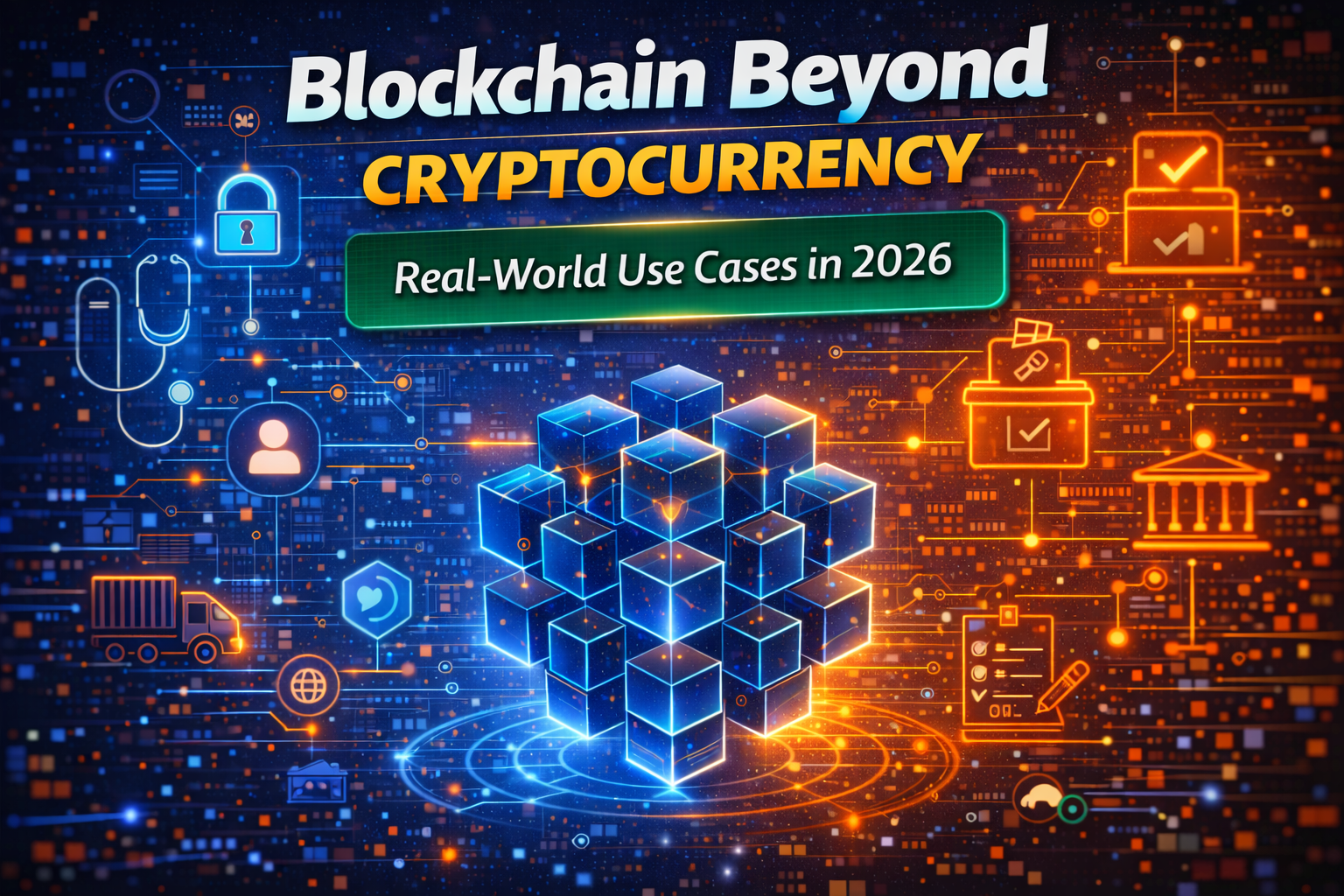
When people hear “blockchain,” they often think only about Bitcoin or cryptocurrency. However, in 2026, blockchain technology is being used far beyond digital coins, transforming industries like healthcare, supply chains, finance, and governance.
This article explains what blockchain is, how it works, and its most important real-world use cases today and in the future.
What Is Blockchain Technology?
Blockchain is a decentralized digital ledger that records transactions across multiple computers in a secure and transparent way.
Key features of blockchain:
- Decentralization (no single authority)
- Transparency
- Immutability (data cannot be easily changed)
- High security through cryptography
These features make blockchain ideal for trust-based systems.
Why Blockchain Is Important in 2026
Blockchain adoption is increasing because it:
- Reduces fraud and manipulation
- Improves data transparency
- Eliminates middlemen
- Enhances security and trust
- Enables faster transactions
Industries are using blockchain to solve real operational problems.
Blockchain Use Cases Beyond Cryptocurrency
🏥 Healthcare
Blockchain secures patient records, ensuring privacy while allowing authorized access across hospitals and clinics.
🚚 Supply Chain Management
Companies track products from origin to delivery, reducing counterfeiting and improving transparency.
🏦 Banking & Finance
Blockchain enables faster cross-border payments, smart contracts, and decentralized finance (DeFi).
🗳️ Digital Voting
Blockchain-based voting systems increase transparency and reduce election fraud.
📜 Smart Contracts
Self-executing contracts automatically enforce agreements without intermediaries.
Role of Smart Contracts
Smart contracts are programs stored on the blockchain that:
- Execute automatically when conditions are met
- Reduce legal and administrative costs
- Eliminate delays and disputes
They are widely used in finance, insurance, and real estate.
Blockchain in Business Operations
Businesses use blockchain for:
- Secure data sharing
- Identity verification
- Intellectual property protection
- Transparent audits
This improves efficiency and builds customer trust.
Challenges of Blockchain Technology
Despite its advantages, blockchain faces challenges:
⚠️ Scalability
Handling large transaction volumes can be slow.
⚠️ Energy Consumption
Some blockchains consume high energy.
⚠️ Regulation
Legal frameworks are still evolving.
⚠️ Complexity
Requires technical expertise to implement.
Blockchain and AI: A Powerful Combination
In 2026, blockchain and AI are increasingly combined:
- AI analyzes blockchain data
- Blockchain secures AI decision logs
- Together they improve trust and automation
This integration is shaping the future of digital systems.
Future of Blockchain Technology
By 2030, blockchain will:
- Be integrated into everyday applications
- Power digital identity systems
- Support global trade networks
- Enable secure data ownership
Blockchain will become invisible infrastructure, working behind the scenes.
Final Thoughts
Blockchain technology is no longer limited to cryptocurrency. Its ability to provide transparency, security, and trust makes it a powerful tool across many industries.
As adoption grows, blockchain will play a key role in building secure and decentralized digital systems.
AI vs Human Intelligence: What’s theReal Difference in 2026? CLICK HERE..
AI Scams in 2026: How to Stay Safe from AI-Powered Fraud CLICK HERE..
Digital Privacy in 2026: How to Protect Your Personal Data CLICK HERE..

One thought on “Blockchain Beyond Cryptocurrency: Real-World Use Cases in 2026”