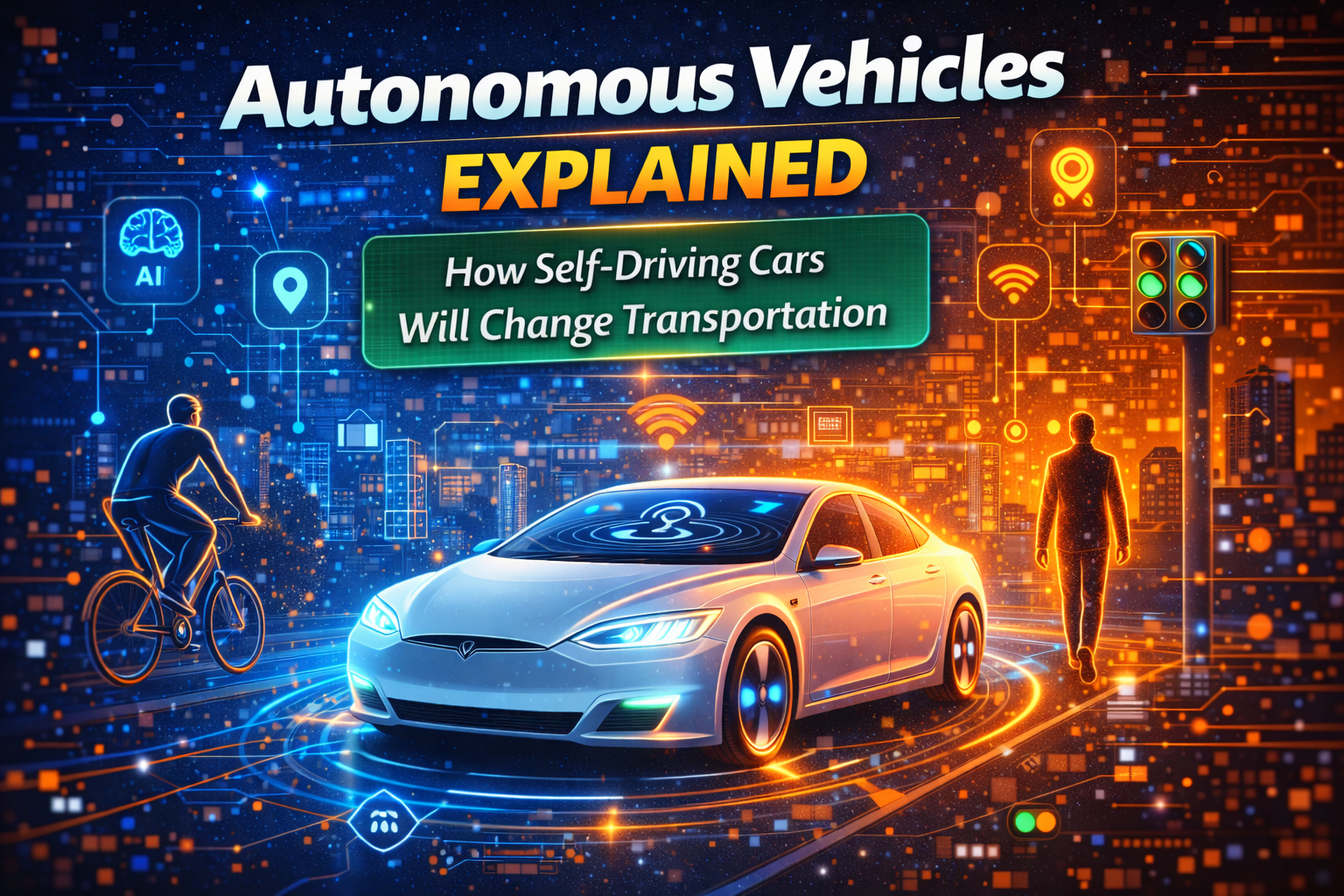
Autonomous vehicles, also known as self-driving cars, are one of the most exciting technological innovations of our time. In 2026, autonomous driving technology is advancing rapidly, promising safer roads, reduced traffic, and smarter transportation systems.
This article explains what autonomous vehicles are, how they work, their benefits, challenges, and what the future holds.
What Are Autonomous Vehicles?
Autonomous vehicles are cars or transport systems that can drive themselves without human intervention by using advanced technologies such as:
- Artificial Intelligence (AI)
- Sensors and cameras
- LiDAR and radar
- Machine learning algorithms
- GPS and real-time maps
These vehicles can perceive their surroundings, make decisions, and navigate roads independently.
Levels of Autonomous Driving
Self-driving cars are classified into different levels:
- Level 0–1: No or minimal automation
- Level 2: Partial automation (driver assistance)
- Level 3: Conditional automation
- Level 4: High automation (limited conditions)
- Level 5: Full automation (no human driver needed)
In 2026, most companies are working toward Level 4 autonomy.
How Autonomous Vehicles Work
Autonomous vehicles rely on a combination of systems:
- Sensors & Cameras – Detect roads, vehicles, pedestrians
- LiDAR & Radar – Measure distance and speed
- AI Decision Systems – Analyze data and make driving decisions
- Navigation Software – Plans routes and avoids obstacles
All these systems work together in real time.
Benefits of Autonomous Vehicles
🚗 Improved Road Safety
Most accidents are caused by human error. Autonomous vehicles can reduce accidents significantly.
🚦 Reduced Traffic Congestion
Smart route planning and coordinated driving improve traffic flow.
🌍 Environmental Benefits
Efficient driving reduces fuel consumption and emissions.
♿ Better Accessibility
Elderly and disabled people gain greater mobility.
Real-World Use Cases in 2026
- Self-driving taxis in select cities
- Autonomous delivery vehicles
- Smart public transportation
- Industrial and warehouse transport
Major companies are already testing and deploying these systems.
Challenges and Risks
Despite progress, autonomous vehicles face challenges:
⚠️ Safety & Reliability
Systems must handle unpredictable real-world situations.
⚠️ Legal & Ethical Issues
Who is responsible in case of an accident?
⚠️ Cybersecurity Threats
Connected vehicles can be targeted by hackers.
⚠️ High Costs
Advanced hardware and software are expensive.
Role of AI and Edge Computing
AI processes massive data from sensors, while edge computing enables real-time decision-making without delays caused by cloud dependency.
This combination is critical for safe autonomous driving.
Future of Autonomous Vehicles
By 2030:
- Autonomous taxis will become common
- Logistics and delivery will be heavily automated
- Smart cities will integrate self-driving systems
- Human driving may become optional in some areas
Transportation will be safer, smarter, and more efficient.
Are Autonomous Vehicles Safe?
Autonomous vehicles are not perfect, but data shows they can potentially be safer than human drivers once fully mature and regulated.
Continuous testing and strict regulations are key.
Final Thoughts
Autonomous vehicles represent the future of transportation. While challenges remain, rapid advancements in AI, sensors, and connectivity are pushing self-driving technology closer to everyday reality.
The coming years will redefine how people and goods move around the world.
Wearable Technology in 2026: Smart Devices Shaping the Future click here…
Smart Cities Explained: How Technology Will Transform Urban Life click here..
Best AI Tools for Students in 2026 (Free & Paid) click here..



One thought on “Autonomous Vehicles Explained: How Self-Driving Cars Will Change Transportation”