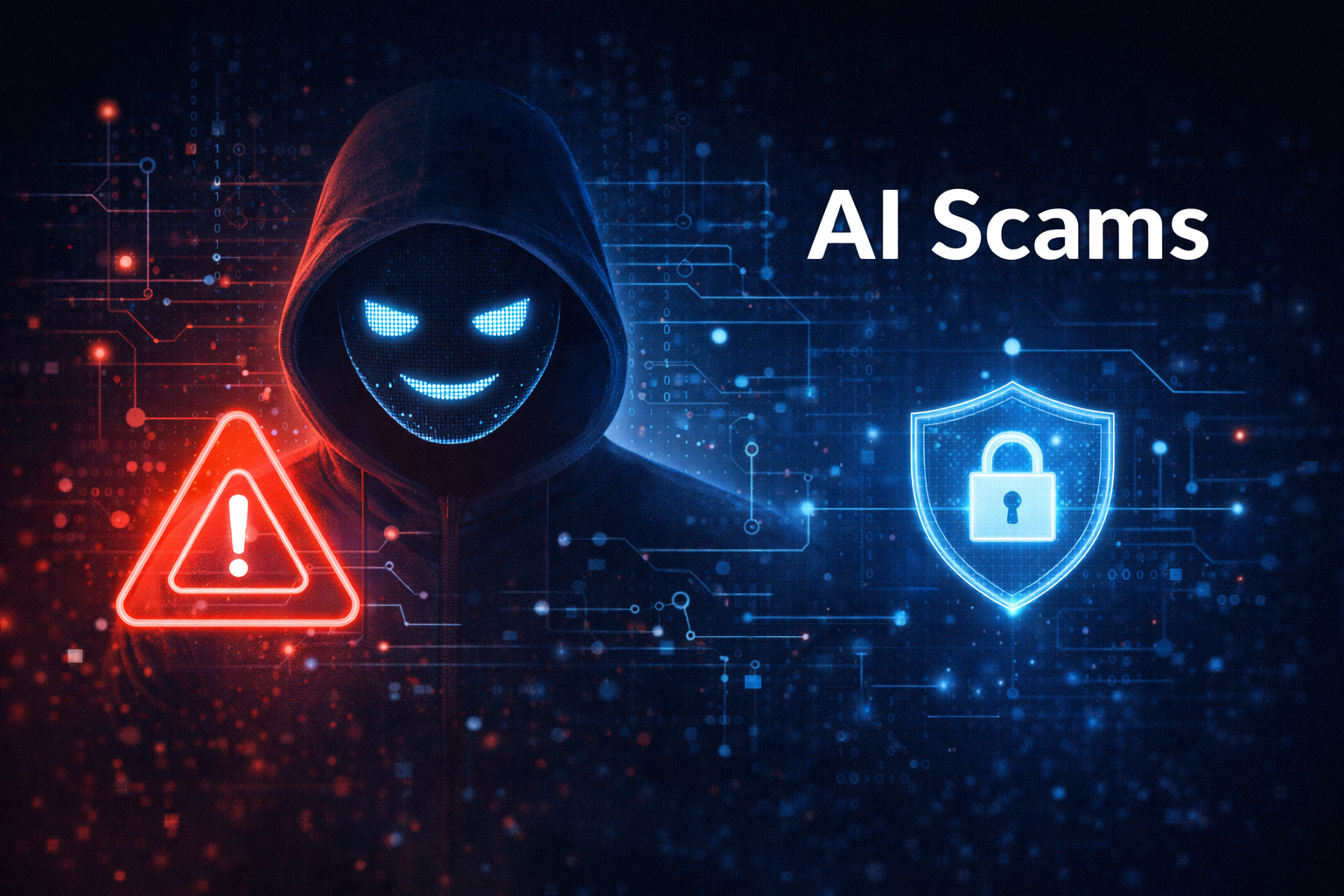
Artificial Intelligence is making life easier—but it is also empowering scammers. In 2026, AI-powered scams have become more convincing, faster, and harder to detect than ever before.
From deepfake calls to fake AI apps, cybercriminals are using advanced tools to trick individuals and businesses. Understanding these scams is the first step toward protecting yourself.
🚨 What Are AI Scams?
AI scams are frauds that use artificial intelligence technologies such as:
- Deepfake audio and video
- AI-generated text and emails
- Automated chatbots
- Fake AI tools and apps
These scams feel more “human” and believable, making them extremely dangerous.
🧠 Why AI Scams Are Increasing in 2026
Several factors are driving the rise:
- Easy access to AI tools
- Low cost of deepfake generation
- Massive personal data leaks
- Trust in familiar voices and faces
Scammers no longer need technical expertise—AI does the work for them.
🕵️♂️ Most Common AI Scams in 2026
🔹 1. Deepfake Voice Scams
Scammers clone voices of:
- Family members
- Company CEOs
- Managers
Victims receive urgent calls asking for money transfers.
🔹 2. AI-Generated Phishing Emails
AI writes perfect, personalized emails with:
- No grammar mistakes
- Correct tone
- Realistic context
These emails are much harder to identify as fake.
🔹 3. Fake AI Tools & Apps
Scammers promote:
- Fake AI writing tools
- Fake image generators
- Fake investment AI bots
Users lose money or unknowingly install malware.
🔹 4. Deepfake Video Scams
Fake videos show:
- Celebrities promoting investments
- Executives approving transactions
These videos look real and spread fast on social media.
⚠️ Warning Signs of AI Scams
Look out for:
- Urgency and pressure
- Requests for secrecy
- Payment via crypto or gift cards
- Unusual communication channels
If something feels rushed, stop and verify.
🛡️ How to Protect Yourself from AI Scams
✅ 1. Verify Before You Trust
Always:
- Call back using known numbers
- Confirm requests via another channel
✅ 2. Use AI Detection Tools
Many tools now detect:
- Deepfake videos
- AI-generated content
✅ 3. Secure Your Digital Identity
- Enable two-factor authentication
- Limit personal data sharing
- Use strong passwords
✅ 4. Educate Yourself and Others
Awareness is the strongest defense against AI scams.
🏢 Impact of AI Scams on Businesses
| Area | Risk |
|---|---|
| Finance | Unauthorized payments |
| HR | Fake job applicants |
| IT | Credential theft |
| Brand | Reputation damage |
Businesses must adopt AI-aware security policies.
🔮 Future of AI Scams and Security
As AI evolves:
- Scams will become more realistic
- Detection tools will improve
- Cybersecurity will rely heavily on AI
The battle will be AI vs AI.
✨ Final Thoughts
AI scams are a serious threat in 2026, but knowledge and caution can prevent most attacks. By staying alert and verifying information, individuals and businesses can stay safe in an AI-driven world.
AI Scams and Cybersecurity: Staying Safe in the Age of Artificial Intelligence click here…
AI Scams: How to Protect Yourself in 2026 click here…


One thought on “AI Scams in 2026: Real Examples and How to Protect Yourself”