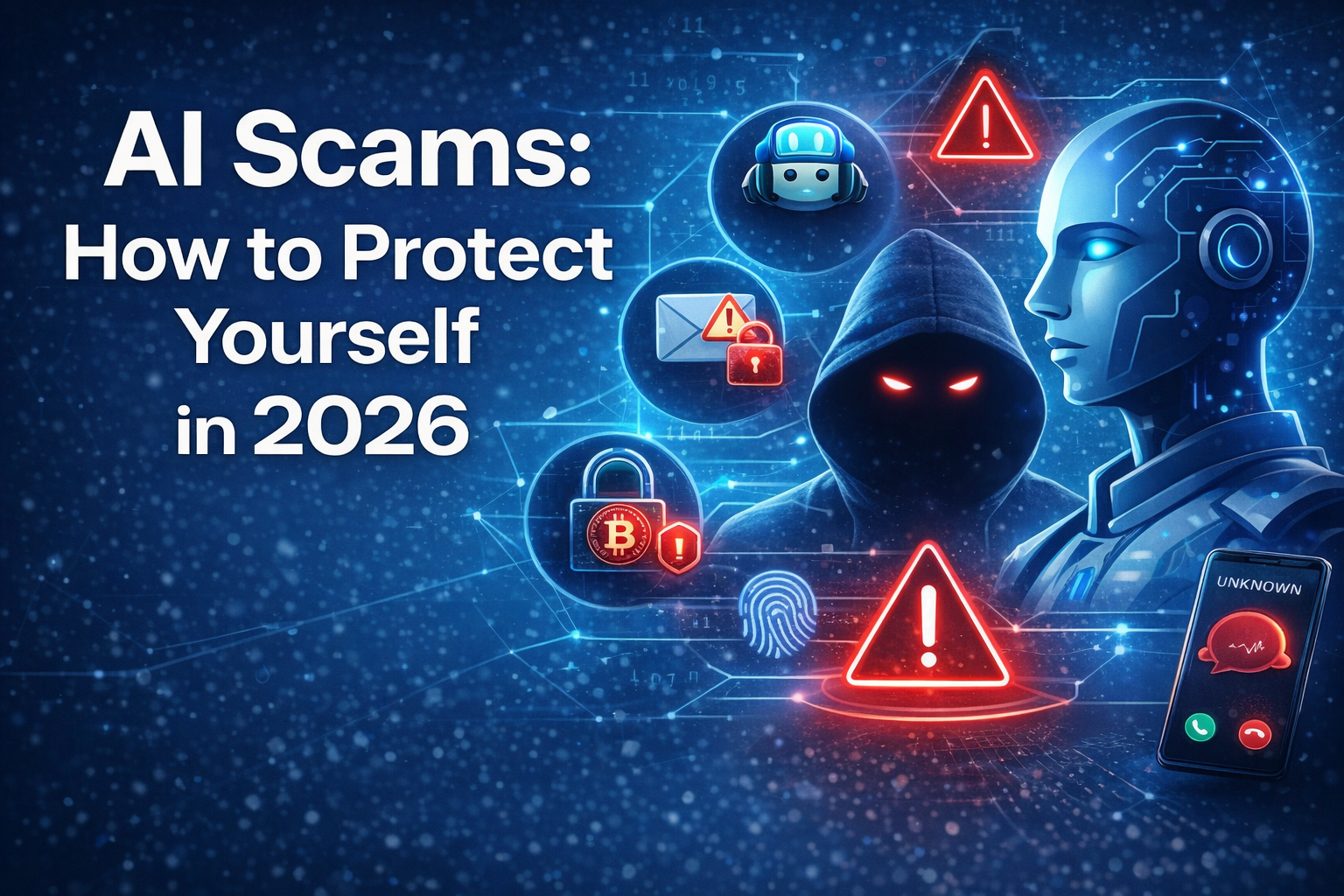
Artificial Intelligence has brought massive benefits—but it has also opened the door to a new generation of highly sophisticated scams. In 2026, AI-powered fraud is smarter, faster, and harder to detect than ever before.
From deepfake videos to AI voice cloning, scammers are using advanced technology to trick individuals, businesses, and even governments.
This guide explains how AI scams work, common types of AI fraud, and practical steps to protect yourself.
🤖 What Are AI Scams?
AI scams are frauds that use artificial intelligence technologies such as:
- Voice cloning
- Deepfake images & videos
- AI-written phishing emails
- Automated chatbots
These scams feel real and convincing, often impersonating trusted people or brands.
🚨 Most Common AI Scams in 2026
🎭 1. Deepfake Video Scams
Scammers create realistic videos of CEOs, politicians, or family members asking for urgent money or sensitive information.
🎙️ 2. AI Voice Cloning Fraud
A short voice sample from social media is enough for AI to clone a voice and make fake emergency calls.
📧 3. AI Phishing Emails & Messages
AI writes perfectly worded emails with no grammar mistakes, making phishing extremely hard to spot.
💬 4. Fake AI Chatbots
Scammers create fake customer-support bots pretending to be banks, crypto exchanges, or government services.
💸 5. Investment & Crypto AI Scams
AI-generated influencers promote fake trading platforms with realistic dashboards and fake profits.
🔍 Why AI Scams Are So Dangerous
| Reason | Explanation |
|---|---|
| Hyper-Realistic | Looks and sounds real |
| Scalable | Thousands of victims at once |
| Personalized | Uses personal data |
| Hard to Trace | Automated & anonymous |
🛡️ How to Protect Yourself from AI Scams
✅ 1. Verify Before You Trust
- Always double-check calls, videos, or emails
- Use a second confirmation method (call back, text, in-person)
✅ 2. Never Act in Panic
Scammers create urgency. Pause and think.
✅ 3. Protect Your Voice & Images
- Avoid posting long voice clips publicly
- Lock down privacy settings on social media
✅ 4. Use Strong Digital Security
- Enable 2FA everywhere
- Use password managers
- Keep software updated
✅ 5. Watch for Red Flags
- Urgent payment requests
- Requests for OTPs or passwords
- Pressure to keep things secret
🧠 AI Scams Targeting Businesses
- Fake CEO calls to finance teams
- AI-generated invoices
- Deepfake video meetings
Solution: Implement multi-level approvals and employee awareness training.
🌍 Government & Tech Response
In 2026, governments and tech companies are:
- Developing AI detection tools
- Creating laws against deepfake fraud
- Using watermarking & AI authentication
But personal awareness remains the strongest defense.
✨ Final Thoughts
AI scams are evolving rapidly—but so can our defenses. Awareness, verification, and digital hygiene are key to staying safe.
In the age of AI, trust carefully and verify everything. 🔐


One thought on “AI Scams: How to Protect Yourself in 2026”