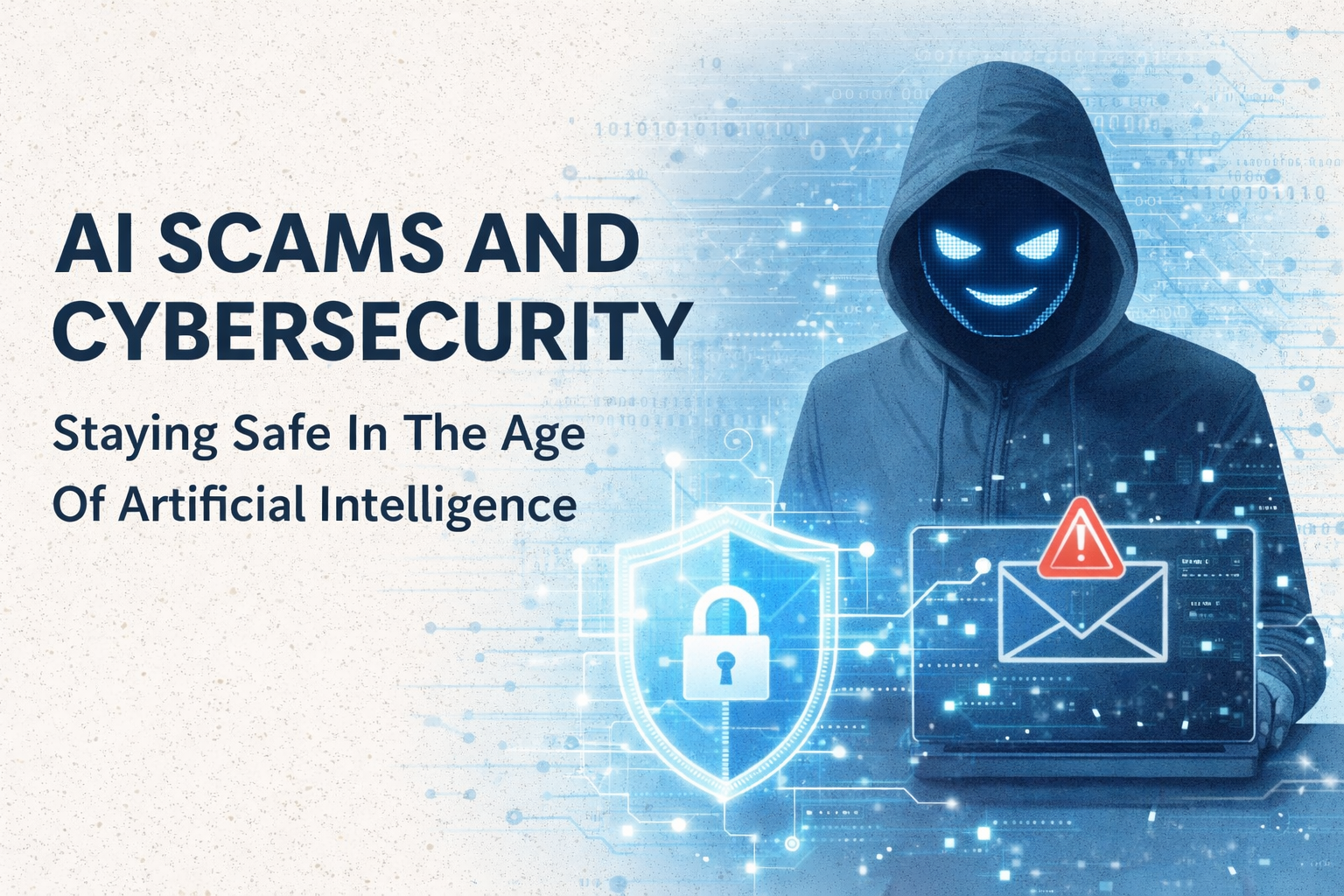
As Artificial Intelligence becomes more powerful, cybercriminals are also getting smarter. In 2026, AI-driven scams and cyberattacks are one of the biggest digital threats faced by individuals, businesses, and governments.
From deepfake fraud to AI-written phishing messages, understanding these risks is essential to stay safe online.
🤖 What Are AI-Powered Scams?
AI-powered scams use advanced technologies such as:
- Deepfake videos and images
- AI voice cloning
- Automated phishing emails
- Intelligent scam chatbots
These scams look and sound extremely real, making them harder to detect than traditional fraud.
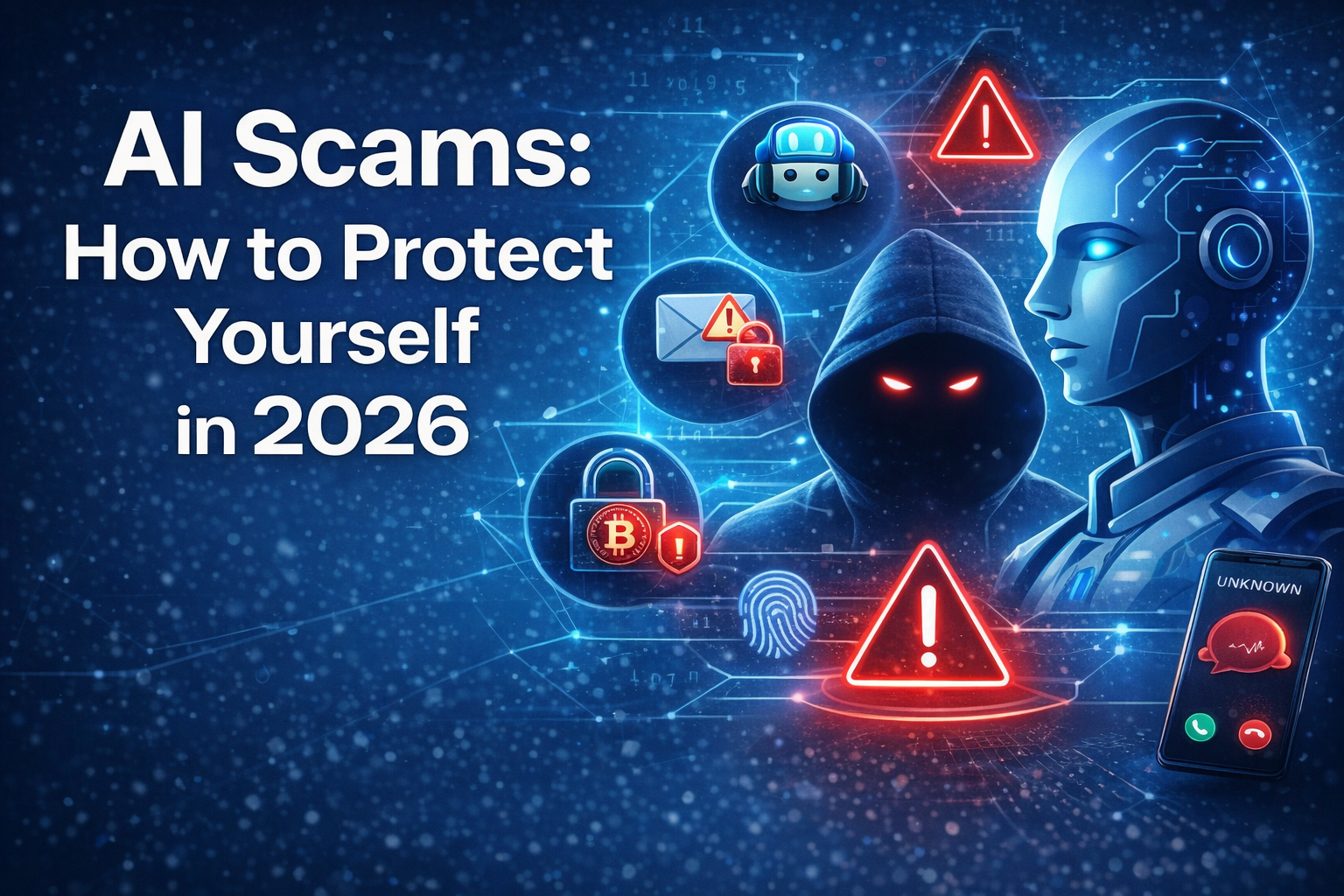
🚨 Most Common AI Scams in 2026
🎭 1. Deepfake Identity Fraud
Scammers create fake videos of CEOs, managers, or relatives asking for urgent payments.
🎙️ 2. Voice Cloning Phone Scams
AI can clone a person’s voice using short audio clips from social media.
📧 3. AI-Generated Phishing Attacks
Emails and messages written by AI are grammatically perfect and highly personalized.
💬 4. Fake Customer Support Bots
Scammers create fake AI chatbots pretending to be banks, e-commerce platforms, or crypto exchanges.
🔍 Why AI Scams Are So Effective
| Reason | Explanation |
|---|---|
| Highly Realistic | Almost impossible to spot |
| Mass Scale | Thousands targeted instantly |
| Personalization | Uses leaked personal data |
| Automation | Operates 24/7 |
🛡️ How to Protect Yourself from AI Scams
✅ 1. Always Verify Identity
Confirm requests using a second communication channel.
✅ 2. Never Share OTPs or Passwords
Legitimate companies never ask for sensitive information.
✅ 3. Be Careful with Voice & Video Content
Limit public sharing of long voice clips and personal videos.
✅ 4. Use Strong Cybersecurity Tools
- Enable two-factor authentication (2FA)
- Use password managers
- Keep devices updated
🏢 AI Scams Targeting Businesses
Companies are facing:
- Fake CEO calls
- AI-generated invoices
- Deepfake video meetings
Solution: Multi-level approval systems and employee training.
🌍 The Future of Cybersecurity
To fight AI scams, companies are developing:
- AI-based scam detection
- Digital identity verification
- Deepfake detection tools
However, human awareness remains the strongest defense.
✨ Final Thoughts
AI scams are evolving fast, but awareness and digital discipline can protect you. In the AI era, trusting blindly is dangerous — verification is the new security.

2 thoughts on “AI Scams and Cybersecurity: Staying Safe in the Age of Artificial Intelligence”