Smartphone innovation has slowed in recent years, but tri‑fold smartphones are changing the game. After foldables, the next big leap is here — phones that fold twice, transforming from a compact device into a tablet‑like screen. Brands like Samsung, Huawei, and Xiaomi are leading this revolution.
So the big question is:
Are tri‑fold smartphones really the future, or just an expensive experiment? Let’s explore.
📱 What Is a Tri‑Fold Smartphone?
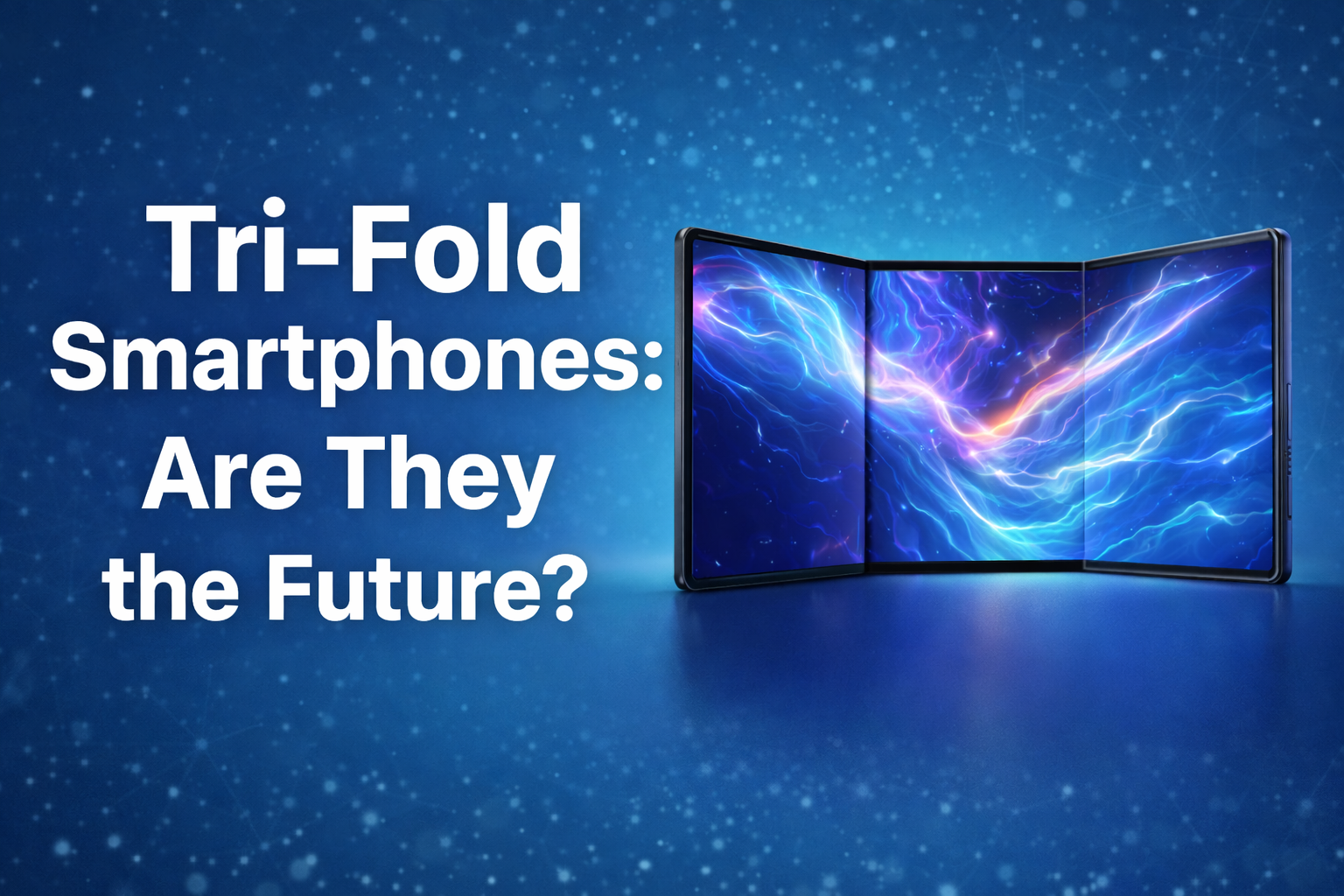
A tri‑fold smartphone uses two hinges and three display panels, allowing the device to fold in multiple ways. When fully unfolded, it offers a large tablet‑sized screen (up to 10 inches), while still folding down to a pocket‑friendly form.
Unlike traditional foldables (which fold once), tri‑fold phones provide:
- Bigger usable screen area
- Better multitasking
- More flexible usage modes
🚀 Why Tri‑Fold Phones Are Trending
🔹 1. Tablet‑Like Experience in Your Pocket
Tri‑fold phones aim to replace tablets and laptops for everyday tasks. Reading, watching movies, editing documents, or multitasking feels more immersive.
🔹 2. Next‑Level Multitasking
You can run 3 apps side‑by‑side — perfect for:
- Content creators
- Business professionals
- Students
🔹 3. Productivity Focus
With features like desktop‑style modes, stylus support, and AI tools, tri‑fold phones are designed for serious work, not just entertainment.
🔹 4. Innovation & Premium Appeal
Tri‑fold phones represent cutting‑edge technology, attracting early adopters and tech enthusiasts who want the future today.
🧠 How Tri‑Fold Phones Are Different from Foldables
| Feature | Foldable Phones | Tri‑Fold Phones |
|---|---|---|
| Hinges | One | Two |
| Screen Size | ~7–8 inches | Up to 10 inches |
| Multitasking | Limited | Advanced |
| Use Case | Phone + Tablet | Phone + Tablet + Laptop‑like |
🔥 Major Brands Working on Tri‑Fold Phones
📌 Samsung
- Galaxy Z TriFold
- Focus on productivity, AI features, and premium design
📌 Huawei
- Advanced hinge engineering
- Early adopter of multi‑fold concepts
📌 Xiaomi & Others
- Experimental designs
- Focus on thinner and lighter tri‑fold devices
⚠️ Challenges of Tri‑Fold Smartphones
❌ 1. Very High Price
Tri‑fold phones are expected to cost ₹2,00,000+, limiting mass adoption.
❌ 2. Durability Concerns
More hinges mean higher risk of wear and tear over time.
❌ 3. App Optimization
Most apps are still not fully optimized for ultra‑large foldable displays.
❌ 4. Weight & Thickness
Despite engineering improvements, tri‑fold phones are heavier than regular smartphones.
🌍 Are Tri‑Fold Smartphones the Future?
✅ Short Answer: Yes — but not for everyone (yet).
Tri‑fold smartphones are likely to become the ultimate productivity devices, replacing tablets for professionals and creators. However, due to high costs and durability challenges, they will remain premium niche devices in the short term.
As technology improves:
- Prices will come down
- Devices will become thinner
- App support will improve
Just like foldable phones, tri‑fold smartphones may take 3–5 years to reach mass adoption.
✨ Final Verdict
Tri‑fold smartphones are not just a gimmick — they are a glimpse into the future of mobile computing. While they’re not ready for everyone today, they clearly show where smartphones are heading: bigger screens, better multitasking, and AI‑powered productivity.
If innovation excites you, tri‑fold smartphones are the future — unfolding right before our eyes.