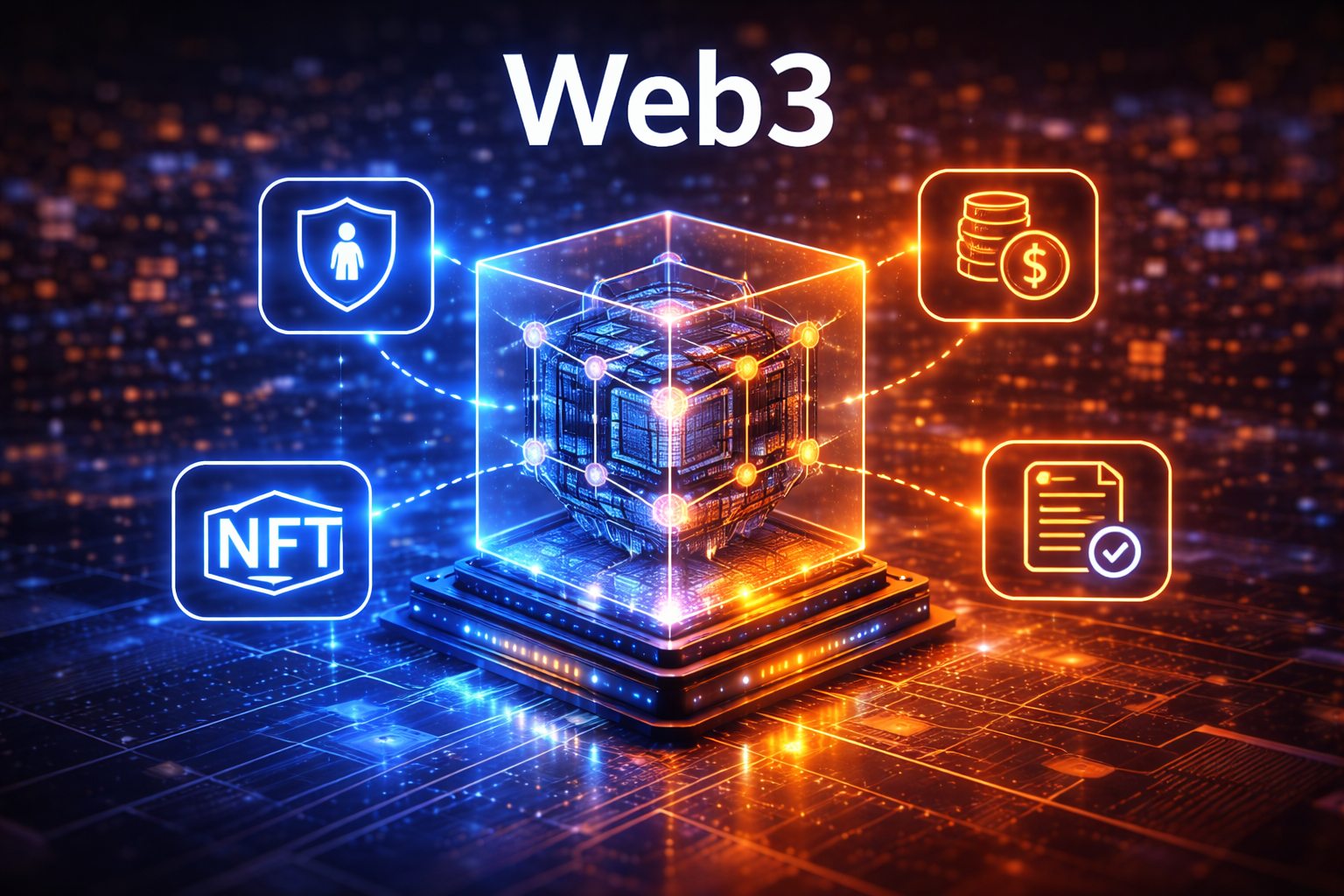
🌐 Introduction: The Internet Is Evolving Again
The internet has gone through major transformations over the years. From simple static web pages to social media platforms and cloud services, each phase has changed how we interact online.
Now, a new version is emerging—Web3.
Web3 promises a decentralized, user-owned internet powered by blockchain technology. But what does that really mean, and why is Web3 considered the future of the web?
Let’s explain it in simple terms.
🔍 What Is Web3?
Web3 is the next generation of the internet built on decentralization rather than centralized control.
Instead of big companies owning your data and platforms, Web3 allows users to:
- Own their data
- Control digital assets
- Interact without middlemen
Web3 is mainly powered by blockchain technology, smart contracts, and cryptocurrencies.
🕸️ Evolution of the Internet: Web1 → Web2 → Web3
| Version | Description |
|---|---|
| Web1 | Read-only websites |
| Web2 | Social media & user-generated content |
| Web3 | User-owned, decentralized web |
Web3 removes the need for centralized authorities controlling platforms and data.
🔗 Core Technologies Behind Web3
1️⃣ Blockchain
A secure, transparent ledger that stores data across multiple computers.
2️⃣ Smart Contracts
Self-executing programs that run automatically when conditions are met.
3️⃣ Cryptocurrencies
Digital currencies used for transactions and incentives.
4️⃣ Decentralized Apps (dApps)
Applications that run on blockchain networks instead of centralized servers.
🔐 Why Decentralization Matters
In traditional Web2 platforms:
- Companies own user data
- Platforms control content
- Data breaches are common
With Web3:
- Users control their identity
- Data is encrypted and distributed
- No single authority can censor or manipulate content
This creates a more secure and transparent internet.
💼 Real-World Use Cases of Web3
💰 Decentralized Finance (DeFi)
Web3 enables financial services like lending, trading, and payments without banks.
🎨 NFTs & Digital Ownership
Users can own digital art, music, and assets with proof of ownership.
🎮 Blockchain Gaming
Players own in-game items and earn real value.
🆔 Digital Identity
Self-sovereign identity systems remove dependence on centralized logins.
⚠️ Challenges Facing Web3
Despite its promise, Web3 has challenges:
- Scalability issues
- Complex user experience
- Regulatory uncertainty
- Security risks from poorly written smart contracts
These challenges are actively being addressed by developers worldwide.
🌍 Web3 vs Traditional Internet
| Feature | Web2 | Web3 |
|---|---|---|
| Data ownership | Platforms | Users |
| Control | Centralized | Decentralized |
| Payments | Banks | Crypto |
| Identity | Platform-based | Blockchain-based |
🔮 The Future of Web3
In the coming years, Web3 may:
- Power social media without ads
- Enable global financial inclusion
- Reduce data monopolies
- Create new digital economies
As technology matures, Web3 could become as common as today’s mobile apps.
🏁 Final Thoughts
Web3 represents a fundamental shift in how the internet works. By putting users back in control, it offers a more transparent, secure, and fair digital ecosystem.
While still in its early stages, Web3 has the potential to reshape the internet for generations to come.
Quantum Computing Explained: How It Will Transform Technology in the Future click here….
Will AI Replace Developers? Reality vs Hype Explained 2026 click here…
Internet of Things (IoT): How Smart Devices Are Connecting the World click here…
One thought on “Web3 Explained: How Decentralization Is Changing the Internet Forever”