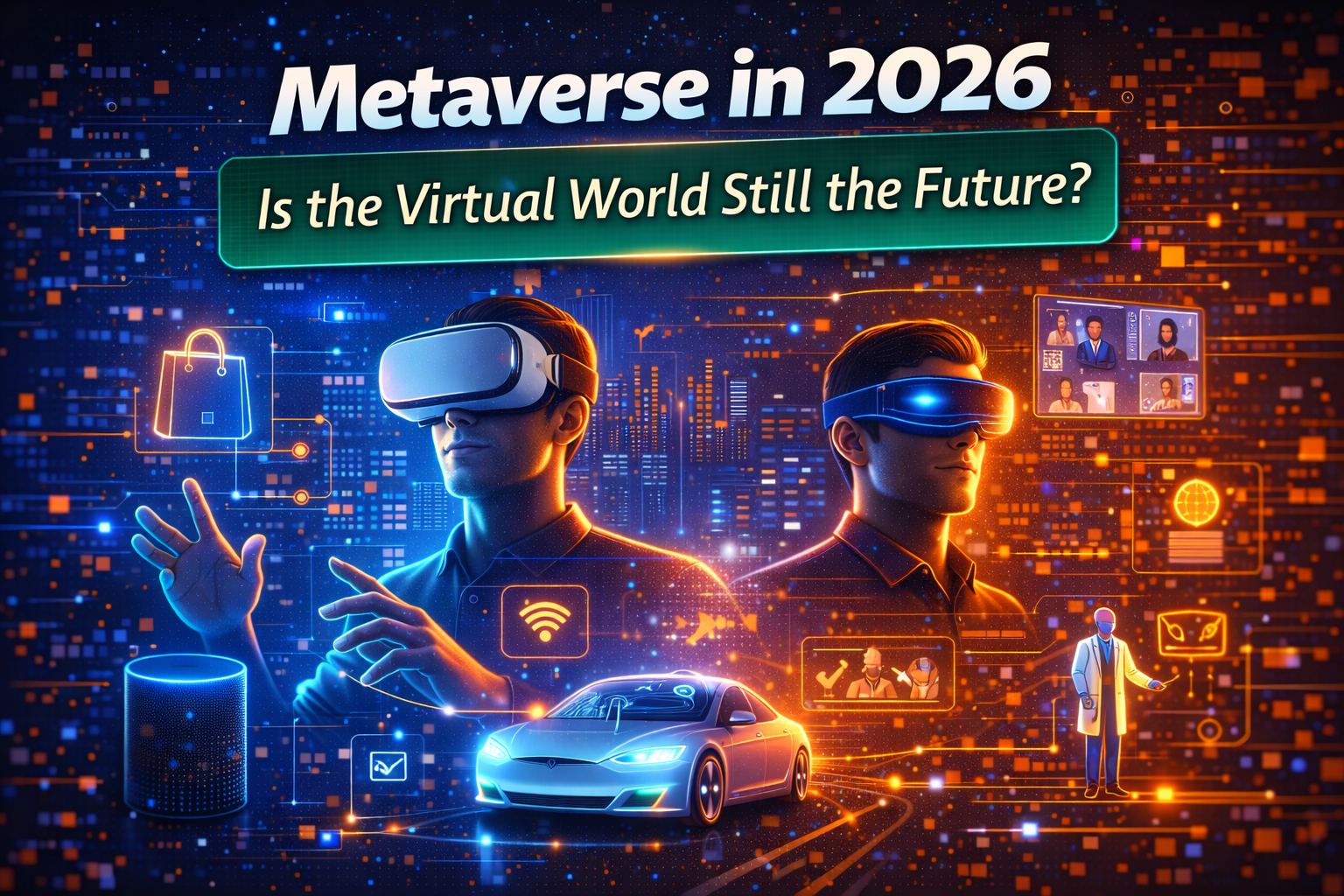
What Is the Metaverse?
The metaverse is a shared digital space where users interact using avatars in virtual or augmented environments.
It combines multiple technologies:
- Virtual Reality (VR)
- Augmented Reality (AR)
- Artificial Intelligence (AI)
- Blockchain & digital assets
- High-speed internet (5G/Cloud)
The goal is to create immersive digital experiences beyond traditional websites and apps.
How the Metaverse Works
The metaverse works through:
- Devices – VR headsets, AR glasses, PCs, smartphones
- Virtual Platforms – Digital worlds and environments
- Avatars – Digital representations of users
- Real-Time Interaction – Social, work, and economic activities
Users can meet, work, play, learn, and trade in these virtual spaces.
Real-World Uses of the Metaverse in 2026
🎮 Gaming & Entertainment
Gaming remains the strongest use case, offering immersive multiplayer experiences.
🧑💼 Remote Work & Meetings
Virtual offices allow teams to collaborate in 3D spaces instead of video calls.
🎓 Education & Training
Virtual classrooms and simulations help with skill training and learning.
🛍️ Virtual Shopping
Brands offer virtual showrooms and try-before-you-buy experiences.
🏥 Healthcare
Doctors use VR simulations for training and therapy.
Why Metaverse Growth Slowed Down
The metaverse faced challenges:
- Expensive VR hardware
- Limited user adoption
- Technical complexity
- Unclear business models
Many companies shifted focus from hype to useful, smaller applications.
Role of AI in the Metaverse
AI plays a major role by:
- Powering intelligent avatars
- Creating virtual environments automatically
- Translating languages in real time
- Personalizing user experiences
AI makes the metaverse more interactive and scalable.
Metaverse vs Traditional Internet
| Feature | Traditional Internet | Metaverse |
|---|---|---|
| Interaction | 2D (screens) | 3D immersive |
| Communication | Text & video | Virtual presence |
| Experience | Passive | Interactive |
| Devices | Phones & PCs | VR/AR devices |
The metaverse is an extension, not a replacement, of the internet.
Does the Metaverse Have a Future?
Yes—but differently than expected.
By 2030:
- Metaverse features will integrate into apps
- AR glasses may replace bulky headsets
- Virtual workspaces will become common
- Gaming and training will drive adoption
The future metaverse will be practical, not flashy.
Final Thoughts
The metaverse in 2026 is no longer about hype—it’s about usefulness. While it may not replace the internet, it will enhance how people work, learn, and interact digitally.
The metaverse is evolving slowly, but steadily, into a meaningful part of the digital world.
Internet of Things (IoT): How Smart Devices Are Connecting the World click here….
Blockchain Beyond Cryptocurrency: Real-World Use Cases in 2026 click here…
Autonomous Vehicles Explained: How Self-Driving Cars Will Change Transportation click here…